Nongshim, a leading South Korean food manufacturer best known for its flagship Shin Ramyun, is stepping up its push into Japan as it targets a top-five position in the country’s instant noodle market.
The company said it aims to generate about $330 million in annual sales in Japan by 2030, building on momentum driven by growing demand for spicy instant noodles—an area where Nongshim has carved out a distinct niche.
Sales at Nongshim’s Japan unit have more than doubled over the past five years, rising from about $62 million in 2020 to more than $137 million last year. The growth comes despite Japan’s market being long dominated by domestic players such as Nissin Foods and Toyo Suisan.
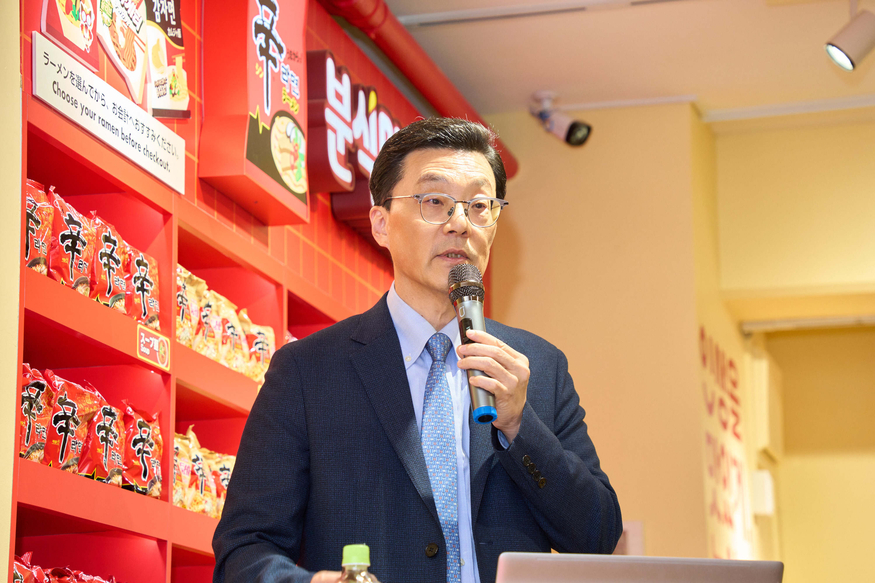
Kim Daiha, head of Nongshim’s Japan operations, said the company is focused on sustaining that growth in a market known for intense competition and rapid product turnover.
“In the early 1990s, some consumers said our products were too spicy,” Kim said. “But maintaining that identity ultimately helped us establish a differentiated category.”
Kim, who has spent more than three decades working in Japan, has overseen the company’s local business since its early stages, playing a key role in establishing Shin Ramyun as a recognizable brand among Japanese consumers.
Nongshim has also navigated a series of external challenges. Following the 2011 Tōhoku earthquake and tsunami, the company opened its Sendai plant to support relief efforts. It later faced several years of weak performance amid strained relations between South Korea and Japan beginning in 2012.
More recently, the company has strengthened its distribution network by expanding into Japan’s three largest convenience store chains—7-Eleven, FamilyMart and Lawson—offering products including Shin Ramyun and newer variants such as Shin Ramyun Toomba. The latter was named to the “Top 30 Hit Products for 2025” list by Nikkei, marking a first for a Korean instant noodle brand.
Shin Ramyun currently accounts for roughly 70% to 80% of Nongshim’s sales in Japan. The company plans to diversify its portfolio by promoting other products, including Neoguri, which has gained attention for its thicker noodles and distinct flavor profile.
Japan’s spicy instant noodle segment is projected to reach about $330 million by 2030. Nongshim is targeting a 50% share of that category, aiming to make its brand synonymous with spicy ramen in the market.
“While local competitors are growing at around 2% to 3% annually, Nongshim is achieving a different level of growth,” Kim said. “Our goal is to firmly establish our position in the birthplace of instant noodles.”