Malaysia is moving closer to fielding its first fleet of South Korean-made FA-50M light combat aircraft, marking another milestone in Seoul’s emergence as a major defense supplier across the Indo-Pacific.
The Royal Malaysian Air Force said support facilities for the FA-50M at Kuantan Air Base are expected to be completed by October, while pilot training in South Korea is entering its final phase, according to Malaysian media reports.
Gen. Tan Sri Mohd Asghar Khan Goriman Khan, chief of the Royal Malaysian Air Force, said construction of the new support infrastructure in Pahang state is more than 90% complete and remains on track for completion later this year.
Malaysia is simultaneously preparing personnel for the aircraft’s arrival. Six Malaysian pilots are currently undergoing flight training on TA-50 trainer jets at Gwangju Air Base in South Korea. The first two pilots are expected to complete training in October, with the remaining four scheduled to finish by December.
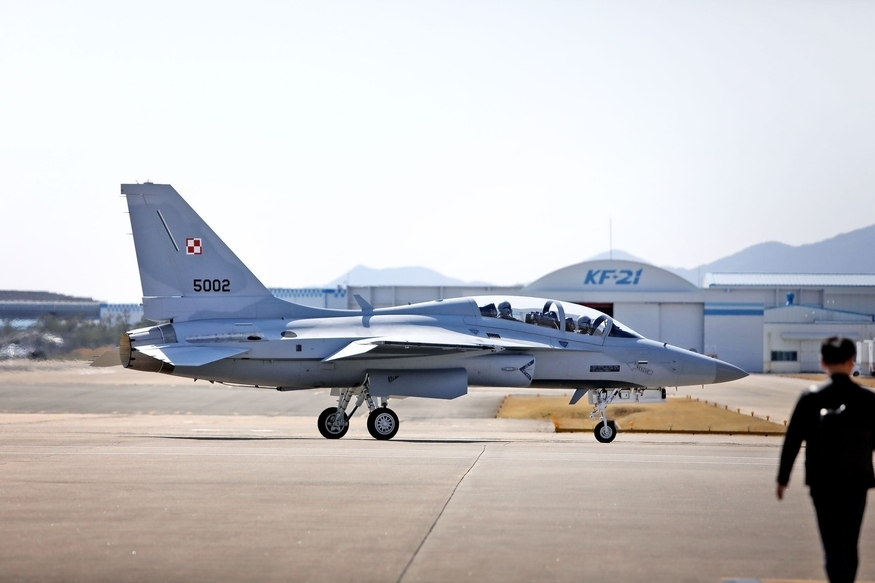
Malaysia signed a contract in 2023 with Korea Aerospace Industries, or KAI, South Korea’s sole aircraft manufacturer, for 18 FA-50 light combat aircraft as part of a broader effort to modernize the country’s aging air force. The first aircraft are expected to arrive later this year.
The Southeast Asian nation is also considering a follow-on order that could double its FA-50 fleet, a move that would further cement KAI’s position in one of Asia’s increasingly competitive defense markets.
For South Korea, the Malaysian program represents more than a single export contract. Seoul’s defense industry has rapidly expanded its footprint overseas in recent years, winning major deals in Europe, the Middle East and Southeast Asia as countries seek relatively affordable, quickly deliverable alternatives to traditional Western weapons systems.
KAI’s FA-50 has become one of the flagship products of that strategy. Variants of the aircraft have already been exported to countries including Poland, the Philippines and Iraq, helping transform South Korea from a largely domestic arms producer into one of the world’s fastest-growing defense exporters.
Malaysia’s deepening military cooperation with South Korea comes as regional security concerns intensify. Kuala Lumpur has accelerated defense modernization efforts amid persistent tensions in the South China Sea and broader geopolitical uncertainty across the Indo-Pacific.
The two countries have expanded defense ties beyond combat aircraft. In April, Malaysia signed a $94 million agreement with LIG Nex1, a South Korean defense company specializing in missile systems, to acquire the Haegung, or “Sea Bow,” medium-range surface-to-air missile system.
As U.S. allies and partners across Asia seek to strengthen their militaries, South Korea’s defense industry is increasingly positioning itself as a key supplier in the region’s evolving security architecture.