South Koreans are paying more for seafood as climate-related disruptions and rising energy costs linked to conflict in the Middle East begin to ripple through one of the country’s most important food industries.
The price increases are affecting everything from king crab and squid to sashimi-grade fish, highlighting how environmental pressures and geopolitical instability are increasingly colliding in global food supply chains.
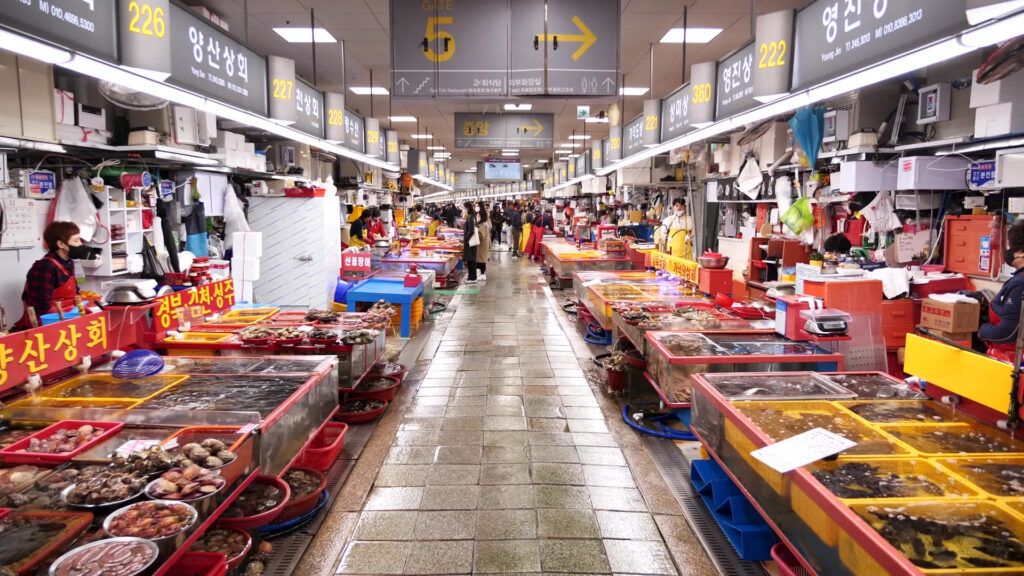
According to data from Noryangjin Fish Market, South Korea’s largest wholesale seafood market in Seoul, prices for several major seafood products rose sharply during the final week of May. King crab prices jumped more than 56% from the previous week, while hairtail, snow crab and octopus also recorded significant gains. Prices for several fish species commonly consumed raw, including olive flounder and sea bass, moved higher as well.
While seafood prices often fluctuate because of seasonal factors, industry officials say the recent increases reflect deeper structural pressures.
One concern is the sharp decline in squid catches. Data from the Korea Maritime Institute, a government-funded maritime research organization, showed that offshore squid catches during a one-week period in May totaled just 9 metric tons, down nearly 77% from the same period a year earlier. The drop has fueled concerns that squid prices could rise further later this year.
Fishing operators are also facing rising costs. Industry participants say higher fuel expenses, worsening fishing conditions and growing distribution costs have reduced profitability, prompting some fishermen to cut back operations or leave vessels idle altogether.
The burden has been amplified by elevated energy prices associated with the prolonged conflict in the Middle East. For an industry heavily dependent on fuel-intensive fishing fleets, higher operating costs are increasingly being passed through the supply chain.
The effects are already reaching consumers. Some seafood restaurants have reported supply disruptions, while menu prices for certain dishes have increased. A specialty hagfish restaurant in Seoul recently informed customers that overseas supply problems had interrupted imports, forcing the business to source products domestically at higher cost.
Another challenge is emerging beneath the water’s surface.
The National Institute of Fisheries Science, South Korea’s government fisheries research agency, forecasts that sea temperatures around the Korean Peninsula will remain well above historical averages this summer. Higher ocean temperatures increase the risk of disease outbreaks and mass fish deaths at aquaculture facilities, potentially threatening future seafood production.
The warnings come as South Korea faces a growing reality confronting food producers around the world. Climate change is altering fishing conditions and reducing catches in some areas, while geopolitical conflicts continue to influence transportation and energy costs. Together, the two forces are creating a more volatile environment for food production.
The South Korean government has begun intervening to stabilize the market. The Ministry of Oceans and Fisheries announced plans to release up to 8,000 metric tons of stockpiled seafood, including pollock, mackerel, squid and hairtail, through mid-July. Officials say the products will be sold through retailers and wholesale channels at prices below prevailing market levels.
The government has also increased fuel subsidies for fishing vessels and expanded funding for equipment designed to protect fish farms from extreme heat. Additional measures include developing heat-resistant species and encouraging the early harvest of fish that are particularly vulnerable to high water temperatures.
For South Korea, where seafood remains a staple of the national diet, the pressures extend beyond a temporary rise in food prices. The country’s seafood industry is becoming an example of how climate risks and geopolitical shocks are increasingly intersecting, reshaping the economics of food production and testing the resilience of supply chains far from the battlefields and warming oceans that first set the changes in motion.