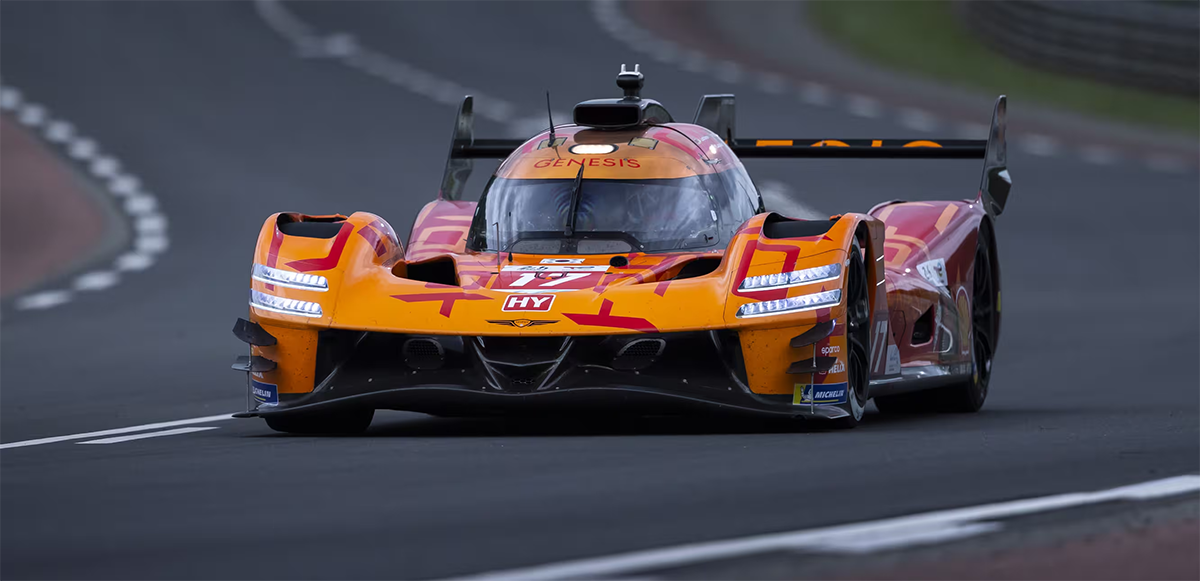
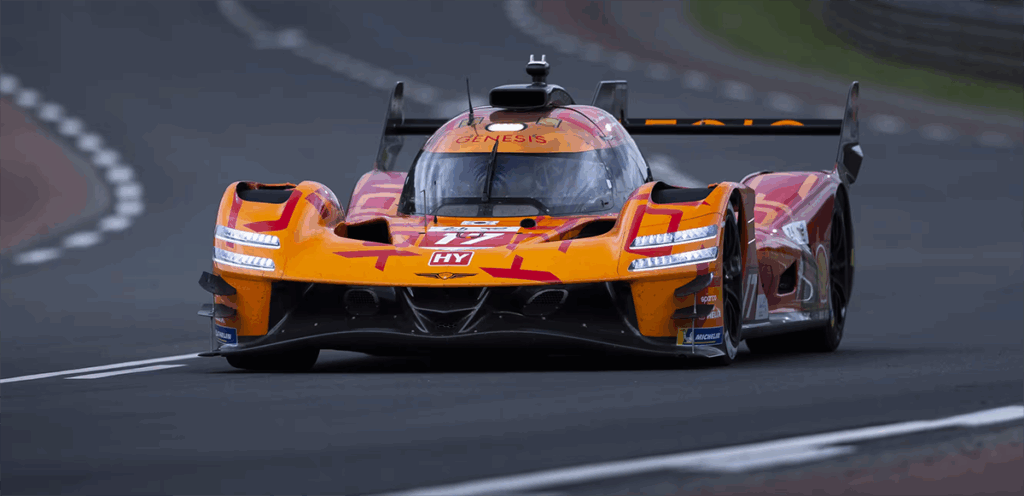
South Korea’s Hyundai Motor Group, the automotive manufacturer behind Hyundai Motor, Kia and luxury brand Genesis, achieved its immediate goal at the 24 Hours of Le Mans this weekend. Its newly formed Genesis Magma Racing team finished one of the world’s most demanding endurance races.
The accomplishment may appear modest on paper. Genesis finished 13th in the Hypercar class during its Le Mans debut, completing 372 laps and approximately 3,150 miles at an average speed of 137 mph. Toyota claimed victory, while Ferrari, BMW and other established manufacturers once again occupied the spotlight.
Yet for Hyundai Motor Group, the race was never primarily about winning.
The company entered Le Mans seeking something that cannot be purchased through marketing campaigns or dealership expansion: credibility.
For decades, the French endurance classic has served as one of the auto industry’s most influential proving grounds. Manufacturers subject their vehicles to 24 hours of continuous stress, testing reliability, engineering, aerodynamics and powertrain performance under extreme conditions. Success at Le Mans has helped shape the identities of brands such as Ferrari, Porsche, BMW and Toyota, giving them a reputation for engineering excellence that extends far beyond motorsport.
Genesis is attempting to enter that conversation.
Founded in 2015, Genesis was created by Hyundai Motor Group to compete directly with established luxury brands including Mercedes-Benz, BMW and Lexus. The brand has gained traction in North America through competitive pricing, distinctive design and strong quality ratings. Europe, however, presents a different challenge.
Luxury buyers across the region have historically placed significant value on heritage and motorsport achievement. While Genesis may offer competitive products, it lacks the decades of racing history that many European rivals use to reinforce their premium image.
That reality helps explain why Hyundai Motor Group is investing in endurance racing.
Le Mans provides a platform to demonstrate technological capability while exposing the Genesis name to enthusiasts, industry insiders and consumers who closely associate racing success with engineering quality. Even without a podium finish, simply competing alongside some of the world’s most respected performance manufacturers carries value for a brand still establishing its identity on the global stage.
The strategy follows a path taken by several major automakers. Toyota, now one of endurance racing’s dominant names, spent decades building its reputation after an unremarkable debut at Le Mans in 1985. Hyundai Motor Group appears to be pursuing a similarly long-term approach, viewing participation not as a one-time publicity event but as part of a broader effort to strengthen Genesis’ standing in the premium market.
The race also serves practical purposes. Endurance competitions generate vast amounts of data on durability, efficiency and vehicle performance under conditions that are difficult to replicate in conventional testing environments. Genesis executives have said lessons learned from racing will be applied to future high-performance production vehicles.
The company’s first appearance at Le Mans therefore represents more than a motorsports milestone. It reflects a broader shift within South Korea’s automotive industry, which has increasingly moved beyond competing on affordability and manufacturing scale toward competing on technology, performance and brand prestige.
Genesis did not leave France with a trophy. For Hyundai Motor Group, however, crossing the finish line may have been the most important result of all. Building a luxury brand capable of challenging Europe’s established names is a long process, and at Le Mans, the company completed one of its first meaningful laps.