Nvidia is signaling that expanding its global artificial-intelligence ecosystem without South Korea may be increasingly difficult, as it deepens partnerships with some of the country’s most influential technology players.
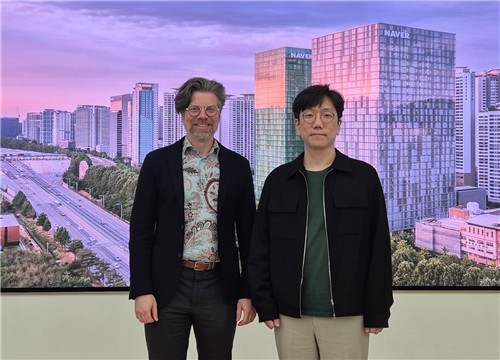
The shift became evident following a visit by Brian Catanzaro, the company’s vice president of applied research, to the headquarters of Naver in Seongnam. There, he met with executives from Naver Cloud to explore collaboration on next-generation AI systems and the broader expansion of Nvidia’s open ecosystem, known as Nemotron.
At the center of the discussions was how to accelerate adoption of Nvidia’s platform in Korea while jointly advancing a successor to Naver’s large language model, HyperCLOVA X. The talks underscored a growing recognition that localized data and language capabilities are becoming critical to scaling AI globally.
Naver Cloud’s strength in Korean-language data and optimization was highlighted as a key asset. The company also proposed efficiency improvements based on low-precision computing techniques, which have boosted training speeds by more than 10%—a factor that could enhance the competitiveness of Nvidia’s ecosystem.
Nvidia has been actively laying the groundwork. Since April 21, it has hosted its “Nemotron Developer Day” in South Korea, promoting an open ecosystem built on AI models, datasets and software tools. As part of the initiative, the company released a Korea-specific synthetic dataset, “Nemotron Persona Korea,” through Hugging Face with permissions for commercial use.
The dataset is designed to help developers build AI systems that better understand Korean language and cultural nuances, drawing on public data from institutions such as KOSIS and the Supreme Court of Korea. Naver Cloud contributed both data and domain expertise during its development.
Industry observers say the strategy reflects a broader pivot. Rather than focusing solely on model performance, Nvidia is increasingly seeking to anchor country-specific ecosystems on its platform—an approach that makes partnerships in data-rich, digitally advanced markets like South Korea indispensable.
Local companies are aligning with that push. LG AI Research has agreed to co-develop domain-specific models using the Nemotron framework, while SK Telecom is incorporating Nvidia’s datasets and tools into its next-generation AI model, A.X K2. Startups including Upstage and Motif Technologies have also joined the ecosystem through recent events.
For Nvidia, the implications are clear. As AI development becomes increasingly dependent on localized data, language precision and cultural context, South Korea is emerging not just as a regional partner, but as a critical node in the company’s global ecosystem strategy.
In that context, building a truly global AI platform without deep integration in South Korea is becoming less of an option—and more of a structural limitation.