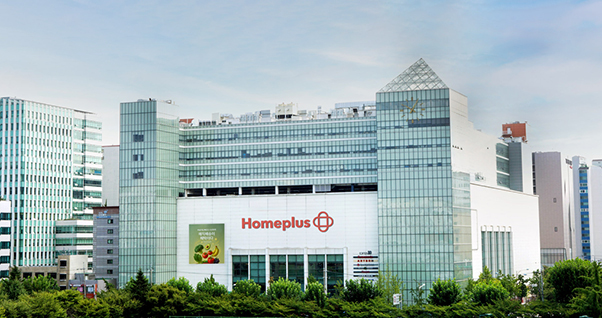
Homeplus, South Korea’s second-largest hypermarket chain and one of the country’s most recognizable retail brands, is scrambling to sell nearly all of its remaining business operations as mounting cash shortages push the company closer to collapse, exposing the growing strain inside a retail sector being rapidly reshaped by e-commerce disruption and changing consumer habits.
The retailer, controlled by private equity giant MBK Partners, has spent more than a year under court-led rehabilitation proceedings. But conditions have deteriorated sharply in recent months as the company struggled to pay employee wages and supplier invoices on time, raising fears that one of South Korea’s largest brick-and-mortar retailers could become the country’s most significant modern retail failure in years.
Homeplus has already agreed to sell Homeplus Express, its supermarket subsidiary and one of its few remaining profitable assets, to NS Shopping, a retail unit of South Korean food conglomerate Harim Group. Now the company is attempting to sell what remains of its core business, including its nationwide hypermarket network, headquarters assets and online retail platform.
The urgency reflects more than a company-specific liquidity crisis. Analysts say Homeplus has become a symbol of a broader transformation sweeping through South Korea’s retail economy as consumers shift rapidly toward online commerce dominated by Coupang, the U.S.-listed e-commerce company often compared to Amazon for its nationwide logistics network and aggressive delivery model.
Chinese discount platforms such as AliExpress and Temu have further intensified pricing pressure across South Korea’s retail market, accelerating the decline of large offline retailers already struggling with slowing store traffic and rising operating costs.
Homeplus and MBK Partners had initially attempted to sell the entire company in a single deal, but few buyers showed interest in taking over a capital-intensive hypermarket operator facing structural decline. The company later pivoted toward selling assets separately after concluding that a full acquisition was unlikely.
Even after the Homeplus Express transaction, the retailer continued aggressive restructuring efforts, temporarily suspending operations at 37 of its 104 hypermarket stores nationwide. The closures triggered growing tension with labor unions over workforce relocation plans and fears of future layoffs.
Operational problems have since deepened. Homeplus reportedly failed to fully pay employee salaries last month and has also struggled to maintain stable product deliveries as supplier concerns over delayed payments spread through its supply chain.
Industry officials warn that if the rehabilitation process collapses entirely, the fallout could extend well beyond Homeplus itself. Thousands of workers, regional suppliers and local commercial districts dependent on large Homeplus locations could face significant economic disruption.
The company has repeatedly sought emergency bridge financing and debtor-in-possession loans from Meritz Financial Group, its largest creditor, while waiting for proceeds from the Homeplus Express sale. But prospects for additional lending appear increasingly limited.
According to industry officials, Meritz demanded joint guarantees from MBK Partners before extending additional loans, a condition Homeplus reportedly considers unrealistic. The standoff has effectively frozen new financing discussions at a critical stage in the company’s restructuring process.
With roughly one month remaining before the court’s deadline to finalize a rehabilitation plan, Homeplus is now racing to secure both liquidity and potential buyers for its remaining operations.
Still, analysts remain skeptical that meaningful acquisition interest will emerge. South Korea’s major retail groups, including Emart and Lotte Mart, are already focused on cutting costs, optimizing store networks and strengthening online operations rather than expanding physical retail exposure.
Private equity firms and large conglomerates have also shown limited appetite for acquiring traditional hypermarket assets as the economics of South Korea’s offline retail industry continue to weaken.
The company’s shrinking real-estate value has further complicated the situation. Homeplus previously estimated its property holdings at roughly $3.1 billion, but Meritz recently assessed 62 store properties used as collateral at approximately $990 million, highlighting how sharply commercial retail valuations have fallen.
For many analysts, the Homeplus crisis now represents more than the potential downfall of a single retailer. It has become a test case for whether South Korea’s traditional hypermarket model can survive in a market increasingly dominated by e-commerce logistics, discount pricing wars and changing consumer behavior.
The outcome could help determine how aggressively South Korea’s broader retail industry restructures in the years ahead.