Chinese brands are becoming an increasingly visible part of everyday life in South Korea, with companies ranging from electric-vehicle maker BYD to tea chain Chagee expanding their presence as consumers show growing confidence in the quality and technological sophistication of Chinese products.
The shift was underscored on June 15 when industry data showed BYD had become the fourth-largest imported-car brand in South Korea by market share during the first five months of 2026, surpassing established rivals including Lexus, Volvo and Audi.
According to the Korea Automobile Importers & Distributors Association, BYD accounted for 4.8% of South Korea’s imported-car market from January through May, trailing only Tesla, BMW and Mercedes-Benz. The company registered 7,023 vehicles during the period, benefiting from rising demand for electric vehicles amid persistently high fuel prices.
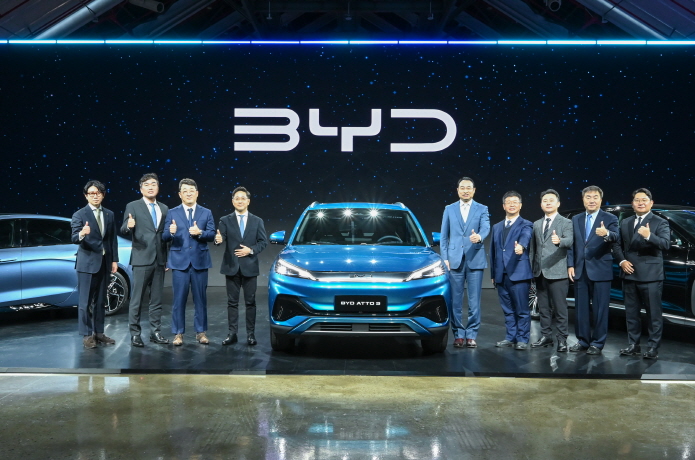
BYD entered the Korean market in April 2025 with the Atto 3, a compact electric SUV priced in the low-$20,000 range after currency conversion, drawing attention with a price tag below many competing models. The company later introduced the Seal midsize sedan and the Sealion 7 crossover, followed by the Dolphin hatchback in February. The Sealion 7 now accounts for roughly half of BYD’s sales in South Korea.
The Chinese automaker is also expanding its sales and service network. It currently operates 34 showrooms and 20 service centers across the country and plans to increase those numbers to 35 and 26, respectively, by the end of the year.
BYD is preparing to broaden its ambitions beyond battery-powered vehicles. At the Busan Mobility Show, scheduled to open on June 26, the company plans to showcase vehicles equipped with its proprietary DM-i hybrid technology, signaling a push into South Korea’s growing hybrid-car market.
The Korean expansion comes as Chinese automakers seek growth overseas amid weak demand at home. Xpeng is expected to enter the Korean market this year, while Xiaomi has announced plans to begin selling vehicles overseas, starting in Germany in 2027.
Chinese companies are also gaining momentum in consumer electronics. Xiaomi has expanded rapidly since establishing a Korean subsidiary in 2025 and now operates eight retail stores nationwide. Its smartphone lineup ranges from budget Redmi devices priced below $250 to flagship models costing nearly $1,500.
The company has increasingly focused on smart-home products. Xiaomi representatives say more than 1,000 electric fans are sold daily in South Korea and that the three best-selling wearable devices on Coupang, the country’s largest e-commerce platform, are all Xiaomi products. Robot vacuum cleaners, televisions and portable battery packs have also found a growing customer base.
Industry executives say Chinese brands are increasingly being judged on their technological capabilities rather than their low prices.
“Consumers no longer view Chinese brands solely as copycats or value-oriented alternatives,” one industry official said. “There is growing trust in their technological competitiveness.”
The shift in perception is spreading beyond automobiles and electronics. Chinese food, beverage and beauty brands have also expanded their footprint in South Korea, helped in part by growing interest among younger consumers in Chinese culture and lifestyle trends.
Travel to China has increased since visa-free entry policies took effect, with destinations such as Shanghai emerging as popular choices among Korean travelers. Analysts say greater exposure to Chinese food, cosmetics and consumer brands has contributed to changing attitudes at home.
Premium tea chain Chagee entered South Korea in late April, opening stores near Gangnam Station and other commercial districts. The company added locations near Deoksugung Palace and Yeoksam Station in May and plans to open its sixth Korean outlet near Konkuk University Station on June 19. Chagee is also expected to open a location inside Shinsegae Department Store’s flagship Gangnam branch later this year.
Other Chinese tea brands, including Auntie Jenny, Heytea, ChaPanda and Mixue, have also established operations in South Korea as competition intensifies in the country’s fast-growing beverage market.
Chinese hot-pot chain Haidilao continues to post strong growth. Haidilao Korea reported revenue of 117.7 billion won, or about $86 million, in 2025, up 50.9% from a year earlier. Operating profit rose 84.6% to 20.2 billion won.
Since entering South Korea in 2014, Haidilao has expanded to 12 locations across Seoul, Busan, Jeju and Daegu.
Meanwhile, Chinese mala-tang franchise Tang Hua Kung Fu surpassed 550 franchise outlets in South Korea last year. Its local unit reported revenue of 22.5 billion won and operating profit of 11.1 billion won.
Luckin Coffee, which overtook Starbucks to become China’s largest coffee chain, is also reportedly preparing to enter the Korean market. The company attracted international attention after opening a store in Manhattan last year.
Chinese beauty brands are also finding success among younger consumers. Color-cosmetics labels Flower Knows and Judydoll have gained popularity through social-media platforms, particularly among Generation Z shoppers. Flower Knows drew large crowds to a pop-up store in Seoul’s trendy Seongsu district last year.
In fashion, Chinese designer brands such as Shushu/Tong have also raised their profile among style-conscious consumers.
The growing presence of Chinese brands across multiple sectors highlights a broader shift in South Korea’s consumer landscape. Once viewed primarily as low-cost alternatives, Chinese companies are increasingly competing on technology, design and brand appeal, presenting a new challenge to established global rivals in one of Asia’s most sophisticated markets.