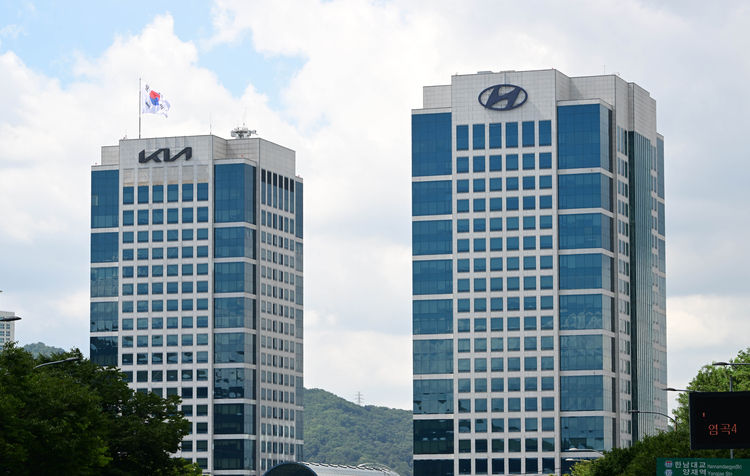
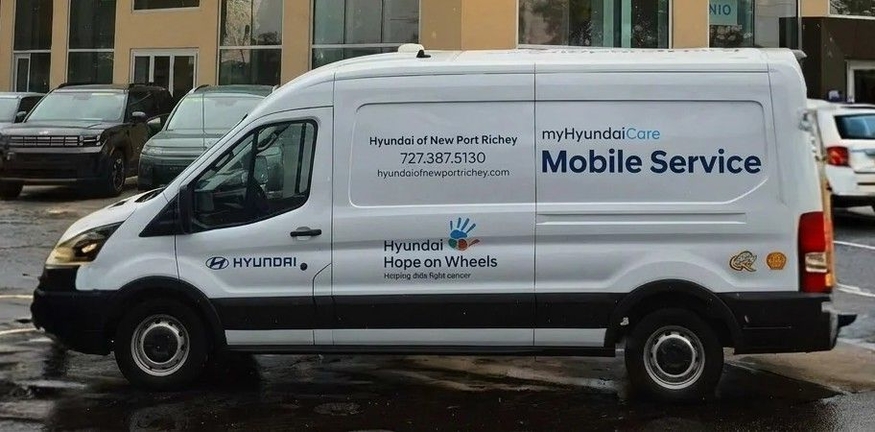
Hyundai Motor is expanding beyond traditional dealership maintenance in the United States, rolling out a mobile repair service that sends technicians directly to customers’ homes and workplaces as the South Korean automaker deepens its push to compete on convenience in America’s increasingly service-driven auto market.
Hyundai Motor America said dealers across the country will begin operating specially equipped service vans capable of handling routine maintenance and minor repairs on-site. The service includes oil changes, tire replacement, software updates, brake pad and rotor servicing, and vehicle detailing using genuine Hyundai parts.
The company plans to gradually expand the program nationwide after an initial pilot phase, targeting as many as 150 mobile service vehicles operating across the U.S. by the end of the year.
Hyundai Motor, South Korea’s largest automaker and one of the fastest-growing foreign car brands in the American market, has seen U.S. sales continue to climb amid strong demand for hybrid and electric vehicles. That growth, however, has also increased pressure on dealership service networks as customers face longer wait times for maintenance appointments and software-related servicing.
The expansion reflects a broader shift underway in the U.S. auto industry, where automakers are increasingly competing not only on vehicle quality and pricing, but also on after-sales convenience. Mobile servicing, once viewed as a niche offering, has gained momentum as companies attempt to replicate the kind of direct customer support model popularized by Tesla.
Under Hyundai’s system, dealerships will manage technician staffing, reservations and vehicle operations, while the automaker provides program-wide support and coordination. The company expects the service to improve customer retention by keeping regular maintenance inside Hyundai’s dealer network while reducing the inconvenience associated with traditional dealership visits.
A Hyundai official said maintenance demand in the U.S. has risen sharply alongside recent sales growth and that the company plans to expand mobile servicing nationwide to respond more aggressively to customer needs.
The strategy underscores how South Korean automakers are increasingly adapting not just their vehicles, but also their ownership experience, to compete more directly inside the American consumer market. As software updates, hybrid systems and connected-car technologies become more central to vehicle ownership, service accessibility is emerging as a critical competitive advantage across the industry.