
For decades, South Korea’s digital economy has been defined by the dominance of domestic technology platforms.
Naver controlled how Koreans searched the internet. KakaoTalk became the default communication tool for nearly every smartphone user in the country. Coupang transformed online shopping and built one of Asia’s most sophisticated e-commerce logistics networks.
In South Korea, local platforms usually win.
Artificial intelligence is changing that equation.
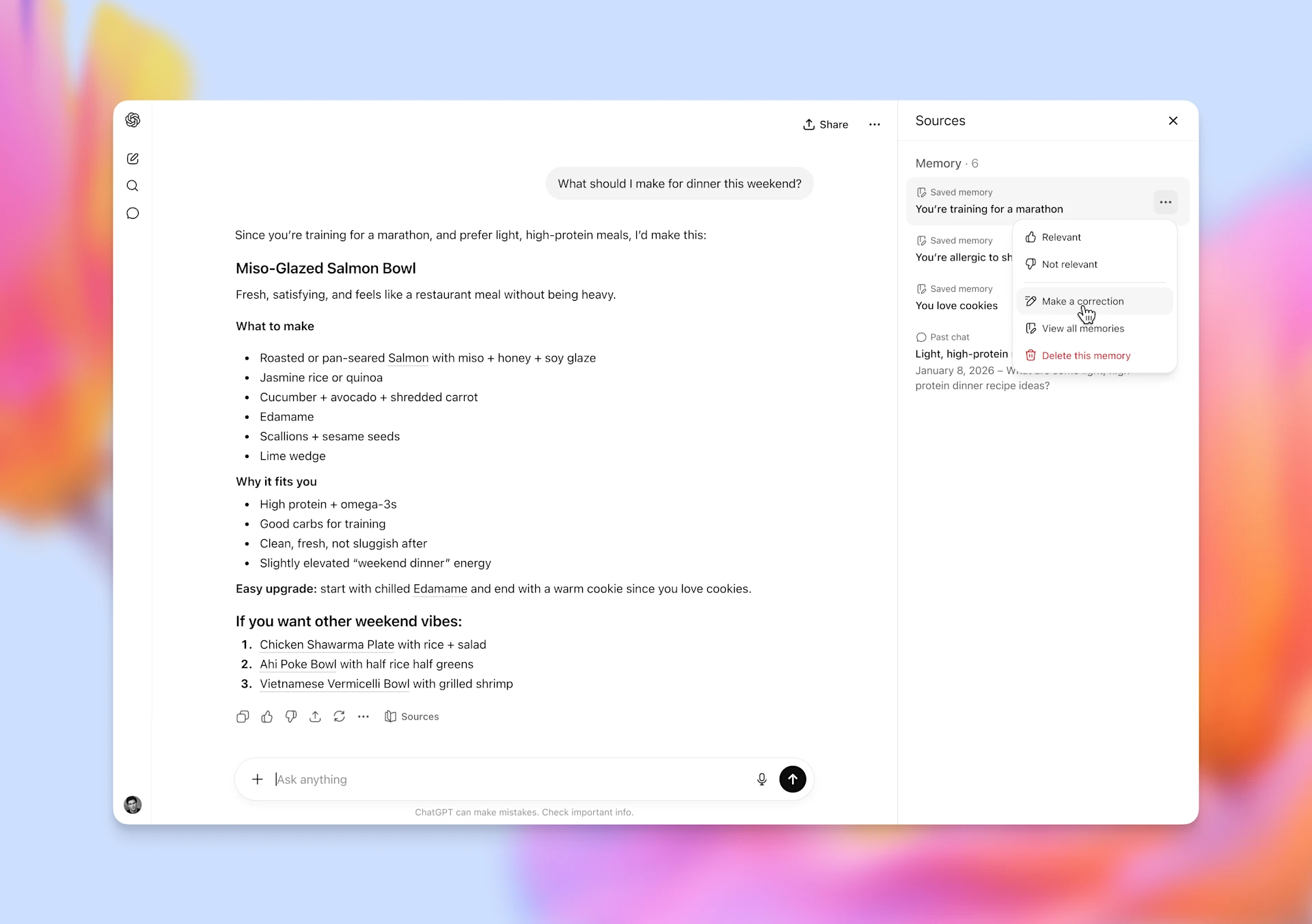
According to a recent survey by the Ministry of Science and ICT, ChatGPT has become the country’s most widely used generative AI service, capturing 68.1% of primary users. More strikingly, nearly four out of five South Korean adults reported using generative AI services within the past three months.
Among people in their twenties, adoption reached 92.6%.
The figures suggest that artificial intelligence has moved beyond the early-adopter phase and become a mainstream digital platform in one of the world’s most technologically connected societies.
That shift matters because South Korea has historically served as one of the most difficult markets for foreign technology companies to penetrate.
Global internet giants have repeatedly struggled against deeply entrenched domestic competitors. Naver remains the country’s leading search engine with a 67.5% share of primary users. KakaoTalk dominates messaging with a 92.5% share. Coupang leads online commerce. Domestic platforms have long benefited from deep cultural familiarity, language advantages and highly integrated ecosystems.
Yet AI appears to be operating under different rules.
Unlike search engines or messaging applications, generative AI users are increasingly prioritizing performance and capability over platform familiarity. In that environment, OpenAI’s ChatGPT has managed to achieve something few foreign technology products have accomplished in South Korea: widespread consumer adoption at scale.
The significance extends beyond market-share statistics.
Digital platforms have historically functioned as gateways to online activity. Search engines controlled access to information. Messaging applications controlled communication. E-commerce platforms controlled transactions.
Artificial intelligence is increasingly beginning to perform all three functions simultaneously.
Consumers are using AI systems to search for information, summarize documents, draft messages, make purchasing decisions and perform tasks that previously required multiple specialized platforms.
That evolution raises a larger question for South Korea’s technology industry.
If AI becomes the primary interface through which users access digital services, the competitive advantages that protected domestic platforms for years could become less important.
South Korea’s technology champions are responding aggressively. Naver is expanding its proprietary AI models. Kakao is investing heavily in AI services. Samsung Electronics and LG are integrating AI capabilities across consumer and enterprise products.
But consumer behavior is already sending a signal.
The most popular emerging platform in South Korea is not a search engine, messenger or e-commerce marketplace. It is an AI assistant.
For a country that built one of the world’s most successful domestic internet ecosystems, that represents a notable shift.
South Korea remains a market dominated by local technology companies. Yet in the industry’s fastest-growing sector, consumers appear to be making a different choice.
The country’s next dominant digital platform may not be defined by where people search, chat or shop.
It may be defined by the AI they ask.