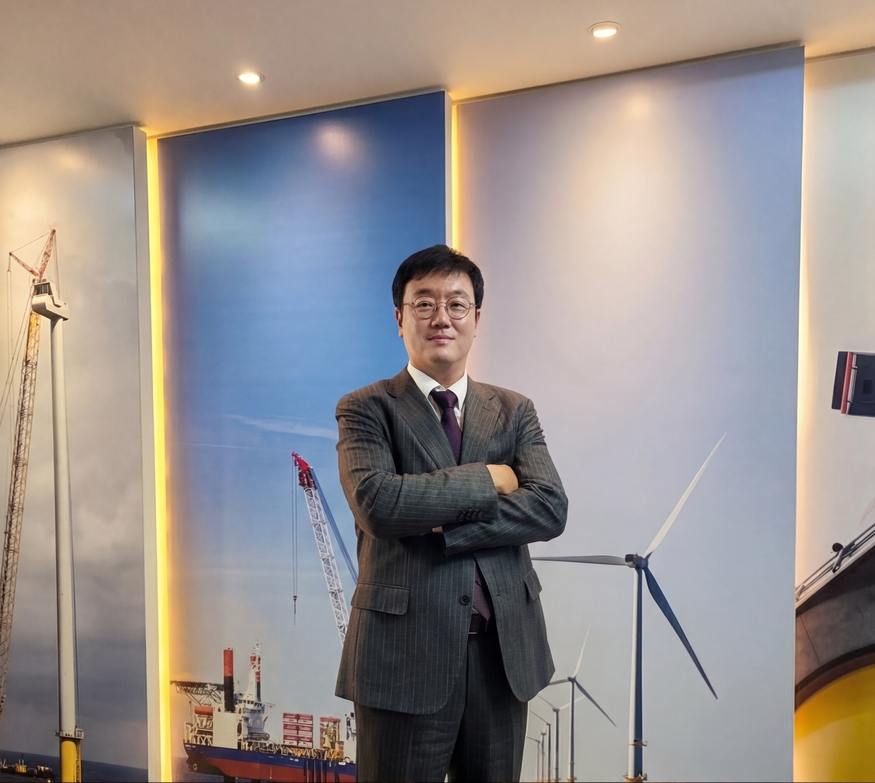
South Korea, trailing more established offshore wind markets in Europe and China, is turning to a project developer to help resolve structural bottlenecks that have slowed its renewable energy expansion. Kim Kang-hak, chairman of Myungwoon Industrial Development, a South Korean offshore wind project developer, has been appointed to lead the Korea Wind Energy Industry Association, signaling a shift toward execution-focused leadership as the country seeks to scale its wind sector.
The leadership change comes as South Korea faces increasing pressure to expand clean energy capacity while reducing dependence on imported fuels. Despite policy support, the wind industry has struggled with permitting delays, regulatory fragmentation, and a limited domestic supply chain, leaving projects exposed to higher costs and longer development timelines than in more mature markets.
Kim’s appointment reflects industry demand for operational expertise at a time when large-scale deployment has proven difficult. His experience is closely tied to the Nakwol offshore wind project, a 364.8-megawatt development that is among the largest currently under construction in the country. The project, now more than 70% complete and expected to be finished within the year, is poised to significantly expand South Korea’s offshore wind capacity and serves as a rare example of domestic supply chain participation at scale.
More than 100 local companies have taken part in the Nakwol project, accounting for roughly 70% of its execution, highlighting the potential for a localized industrial base. Still, such cases remain limited. South Korea’s wind sector lacks the integrated manufacturing ecosystem seen in Europe and the cost efficiencies driven by scale in China, underscoring the gap the country must close to compete globally.
In his inaugural remarks, Kim identified regulatory uncertainty as the industry’s most pressing challenge and called for streamlined approval processes to accelerate deployment. He also emphasized closer coordination among developers, turbine manufacturers, and component suppliers, framing the sector as an interconnected system that must evolve together to remain competitive.
The strategy extends beyond domestic reform. As South Korean companies build experience through complex offshore projects, the next phase will depend on their ability to enter overseas markets. Strengthening the supply chain, industry officials say, could enable local firms to transition from domestic project participants to global suppliers in a fast-growing renewable energy market.
Whether the leadership shift can translate into faster project execution and sustained industrial growth will determine how quickly South Korea can narrow the gap with global wind power leaders and establish a foothold in an increasingly competitive sector.