CJ Olive Young is stepping up its global ambitions with a direct push into the U.S., betting that a retail model built on product discovery and in-store experience can carve out space in one of the world’s most competitive beauty markets.
The company plans to open its first U.S. store in Pasadena, California, next month, marking a formal entry into a market long dominated by large-format chains such as Sephora and Ulta Beauty. Additional locations are already in the pipeline across major Southern California shopping hubs, including Westfield Century City and Del Amo Fashion Center, as Olive Young builds an initial cluster around Los Angeles.
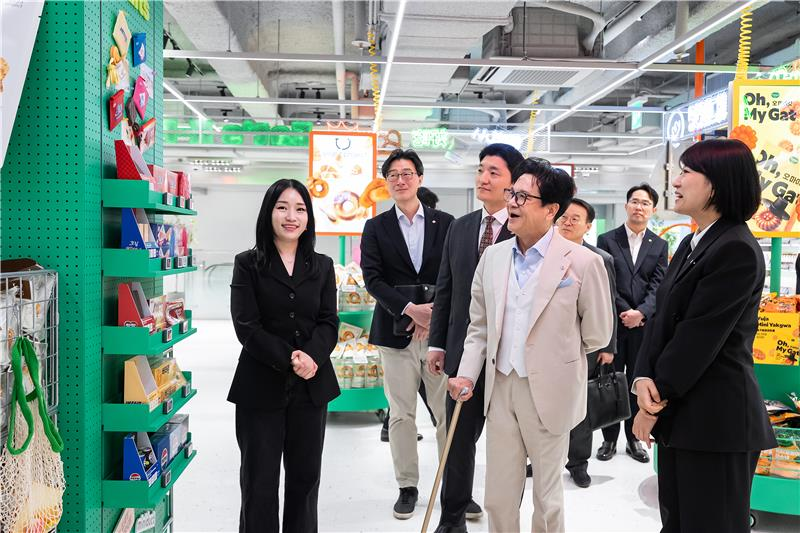
Unlike traditional U.S. beauty retailers, which center on established global brands, Olive Young is positioning itself as a platform for discovery. Its stores emphasize hands-on testing, curated merchandising and rapid product turnover, with a strong focus on emerging Korean beauty labels.
The strategy reflects confidence in the growing global appeal of K-beauty, as well as a belief that U.S. consumers are increasingly open to experiential retail formats. Olive Young plans to introduce roughly 400 Korean indie brands through its U.S. network—many of which lack direct access to American distribution channels—effectively turning its stores into an entry point for new brands seeking international exposure.
To support the expansion, the company has established a logistics base in California and set up a U.S. subsidiary in Los Angeles, signaling a long-term commitment rather than a limited pilot. The infrastructure is designed to streamline supply chains and enable faster product rotation, a key feature of its retail model.
The move also underscores a broader shift in Olive Young’s growth strategy. Backed by parent company CJ CheilJedang, the retailer has evolved from a domestic drugstore chain into a hybrid platform combining retail, brand incubation and global distribution.
For the U.S. market, the competitive question is not simply about pricing or product assortment, but whether Olive Young’s model—built around in-store discovery and consumer interaction—can gain traction in a system historically driven by brand recognition and scale.
Early performance in Southern California will likely serve as a test case. If successful, Olive Young could expand beyond regional clusters and accelerate its footprint nationwide, potentially reshaping how emerging beauty brands reach U.S. consumers.
For now, the company is entering as an unfamiliar name. But with a differentiated retail approach and a pipeline of new brands, it is positioning itself as more than just another foreign entrant—aiming instead to redefine how beauty products are discovered and sold in the U.S. market.