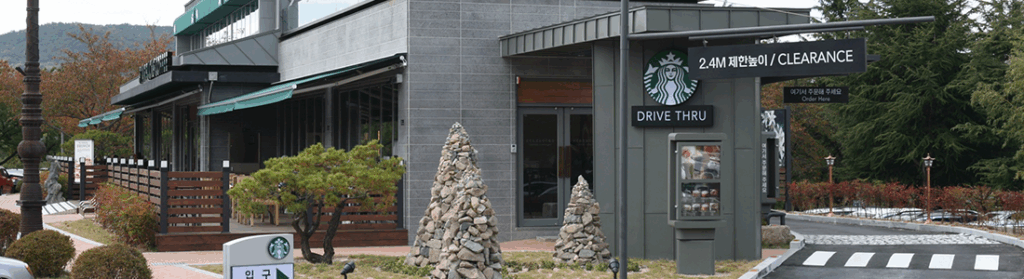
Starbucks Korea will close all of its more than 2,160 stores nationwide at 3 p.m. Sunday to conduct mandatory history and ethics training, an unprecedented move that underscores the reputational risks companies face in South Korea when they mishandle politically and historically sensitive issues.
The early closure marks the first time Starbucks Korea has suspended operations across its entire store network since opening its first location in Seoul in 1999.
Starbucks Korea, the South Korean unit of U.S. coffee giant Starbucks operated by Shinsegae Group, said employees will participate in company-wide training designed to strengthen historical awareness and social sensitivity following a marketing controversy that triggered public criticism last month.
Store employees, known internally as partners, will watch recorded lectures after stores close, while workers on leave will be required to complete the training online at a later date.
The educational program includes lectures by Oh Je-yeon, a history professor at Sungkyunkwan University, and Koo Jung-woo, a sociology professor at the same institution. The sessions focus on historical awareness in corporate decision-making and ethical standards expected of businesses operating in modern society.
Chung Yong-jin, chairman of Shinsegae Group, one of South Korea’s largest retail conglomerates, is also scheduled to participate in the training alongside affiliate chief executives ahead of a management meeting on June 24.
The company said it will overhaul its marketing approval process by introducing mandatory social-sensitivity reviews and a multilayer screening system intended to identify potential risks before campaigns are launched.
The measures follow backlash over a promotional campaign for reusable tumblers that featured phrases including “Tank Day” and “Bang on the Desk!” Critics argued that the wording trivialized two defining moments in South Korea’s democratic history: the 1980 Gwangju Democratic Uprising, during which military forces violently suppressed pro-democracy demonstrators, and the 1987 death of student activist Park Jong-chul under police torture, an incident that galvanized nationwide protests and accelerated the country’s transition to democracy.
While corporations in many countries routinely confront consumer criticism over advertising missteps, the controversy illustrates how historical memory remains deeply intertwined with public life in South Korea, where companies are increasingly expected to demonstrate not only commercial judgment but also a sophisticated understanding of the nation’s modern political history.