South Korean shipping company Sinokor Merchant Marine has pushed back against implications in recent international media coverage suggesting ties to an oil tanker that reportedly transited the Strait of Hormuz with its tracking system disabled, arguing that its role was materially different from how the vessel’s ownership and control structure had been portrayed.
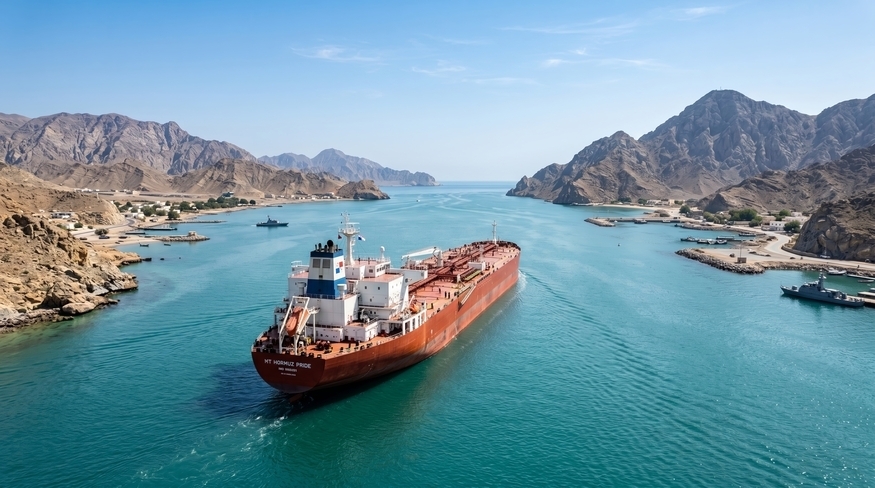
The company said on May 12 local time that the tanker Basra Energy, cited in foreign reports concerning vessels crossing the strategic waterway while Automatic Identification Systems (AIS) were turned off, was neither owned nor operationally controlled by Sinokor.
The clarification highlights a notable divergence from broader interpretations in some international reporting, including narratives that more directly linked the vessel to Sinokor-affiliated operations.
According to vessel-tracking data cited in recent reports, the Basra Energy loaded approximately 2 million barrels of crude oil from the United Arab Emirates’ Zirku terminal before passing through the Strait of Hormuz on May 6 and unloading at Fujairah on May 8.
But Sinokor said its involvement was limited and indirect.
The company explained that its affiliate, Janggeum Maritime, had temporarily chartered the vessel from a special-purpose company before subleasing it to an independent third-party operator. Sinokor stressed that it held no equity ownership, direct operational authority or controlling stake in the special-purpose entity associated with the tanker.
That distinction is significant in the global shipping industry, where vessels frequently operate under complex layers of leasing arrangements, shell companies and charter agreements that can obscure direct ownership and management responsibilities.
Industry officials noted that sub-chartering structures are common across international maritime logistics and do not necessarily imply strategic or operational control by intermediary firms.
The dispute over characterization comes as shipping through the Strait of Hormuz faces heightened scrutiny amid escalating geopolitical tensions in the Middle East.
As one of the world’s most strategically sensitive oil corridors, the waterway handles a substantial share of global crude exports, making any vessel activity involving AIS disruptions particularly sensitive for regulators, intelligence agencies and energy markets.
Turning off AIS systems can raise concerns related to sanctions evasion, security threats or geopolitical risk, though motives can vary depending on commercial, technical or regional security circumstances.
For Sinokor, the public rebuttal appears aimed at protecting corporate reputation and clarifying that layered maritime leasing structures should not be conflated with direct operational responsibility.
The episode also underscores how increasingly complex global shipping arrangements can create discrepancies between headline interpretations and the underlying legal or financial realities of vessel ownership.
As geopolitical risks intensify and scrutiny over maritime transparency grows, such distinctions may become increasingly important for shipping companies seeking to avoid reputational exposure in global energy supply chains.