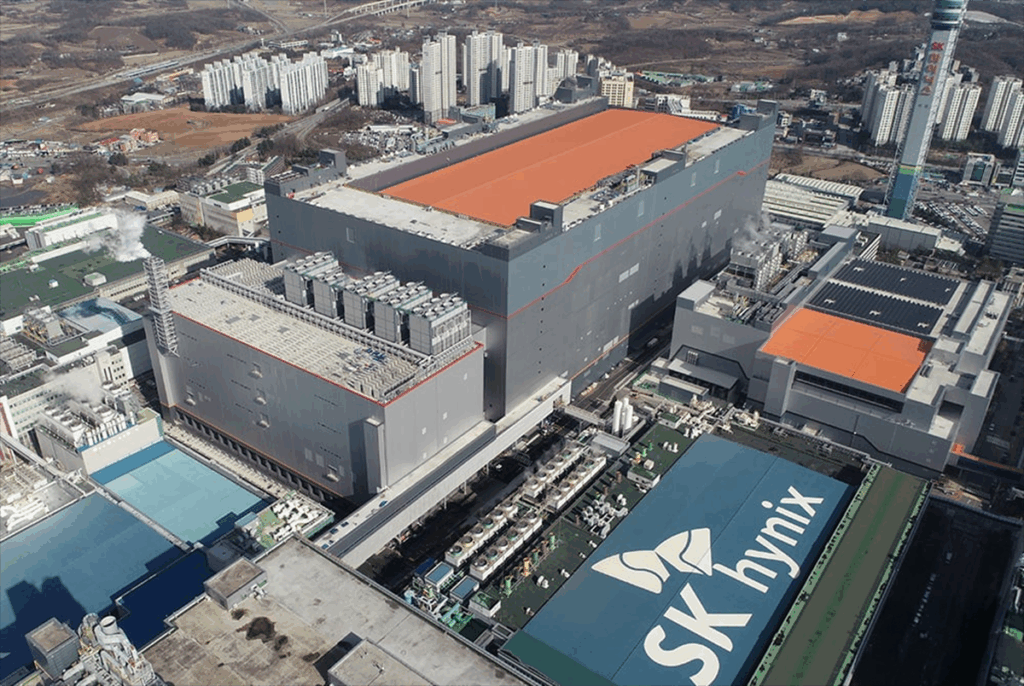
SK hynix, one of the world’s largest memory chipmakers and the leading supplier of high-bandwidth memory used in artificial intelligence systems, is moving toward a U.S. listing as it seeks to align its market valuation with its growing role in the global AI supply chain.
The company has confidentially filed with the U.S. Securities and Exchange Commission to list American depositary receipts, a structure that would allow its Seoul-listed shares to trade in the U.S. The plan is targeted for later this year, though details remain undecided.
The move comes as demand for AI infrastructure accelerates, turning advanced memory into a critical bottleneck in the semiconductor industry. SK hynix has emerged as a central supplier in that shift, holding about 57% of the high-bandwidth memory market, ahead of Samsung Electronics and Micron Technology.
Despite that position, the company trades at a steep discount to its U.S. rival. SK hynix’s price-to-earnings ratio is roughly 5.7, about half of Micron’s, even though it generated around $31 billion in operating profit last year, exceeding both competitors.
A U.S. listing is expected to expose the company to a broader investor base more accustomed to valuing semiconductor firms through the lens of AI-driven growth, potentially narrowing that gap.
At the same time, SK hynix is preparing for a sharp increase in capital spending. Chief Executive Kwak Noh-Jung said the company aims to build net cash to at least $66 billion, up from roughly $8 billion, in order to support large-scale investments and navigate industry cycles.
Those investments include a semiconductor cluster in Yongin, south of Seoul, now estimated at about $400 billion, along with additional fabrication projects. The scale reflects how AI demand is reshaping the economics of memory production.
Market estimates suggest the ADR offering could reach between $7 billion and $10 billion. Because the structure relies on existing shares, the listing is expected to have limited direct fundraising impact, instead serving as a way to improve liquidity and reposition the company within global capital markets.
Chey Tae-won recently said the company is reviewing the listing to expand its exposure to international investors, signaling a broader shift as competition in AI semiconductors increasingly depends not only on technology leadership, but also on access to U.S. capital and valuation benchmarks.