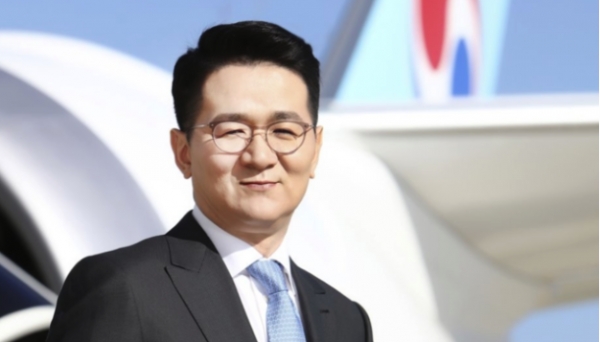
Cho Won-tae, chairman of Hanjin Group, received record compensation last year even as key affiliates reported weakening earnings, drawing criticism over a widening gap between pay and performance.
According to regulatory filings released March 18 (local time), Cho earned a combined $10.9 million from four affiliates, including Hanjin KAL, Korean Air, Jin Air and Asiana Airlines.
His compensation included about $4.6 million from Hanjin KAL, consisting of $3.2 million in salary and $1.4 million in bonuses tied in part to the Asiana Airlines acquisition. From Korean Air, he received approximately $4.3 million, including $3.1 million in salary and $1.2 million in bonuses. He also earned about $1.3 million from Jin Air and $740000 from Asiana Airlines.
The total marks the highest individual compensation in the group’s history since executive pay disclosures became mandatory in 2013. Cho’s pay has steadily risen since taking office, increasing from about $1.4 million in 2019 to more than $10 million last year, with no interruption even during the pandemic-driven downturn in the aviation sector.
The pay increase comes as earnings at major affiliates declined. Korean Air reported operating profit of $8.4 billion last year, down 47.2% from a year earlier, while net income fell 53.2% to $4.9 billion. Although revenue increased, profitability weakened sharply.
Hanjin KAL also posted weaker results, swinging to an operating loss of about $56 million from a profit of roughly $370 million a year earlier. Net income dropped 68.9% to approximately $1.2 billion.
Despite the downturn, the holding company raised its executive compensation cap from about $6.8 million to $9.1 million last year and plans to maintain the same limit at an upcoming shareholder meeting, prompting concerns that pay levels are becoming increasingly detached from performance.
External pressures are also mounting. A stronger U.S. dollar and higher oil prices have increased costs for airlines, with crude prices recently approaching $100 per barrel. Korean Air has raised fuel surcharges, adding to the burden on consumers.
Analysts say the combination of rising costs and uncertain demand could weigh on profitability this year. At the same time, consumer sentiment has been strained by ongoing controversies, including regulatory pushback over a proposed mileage integration plan following the Asiana acquisition and criticism of new seating policies perceived as prioritizing profitability over customer benefits.
The sharp rise in executive pay amid these challenges is likely to intensify scrutiny from investors and consumers alike.