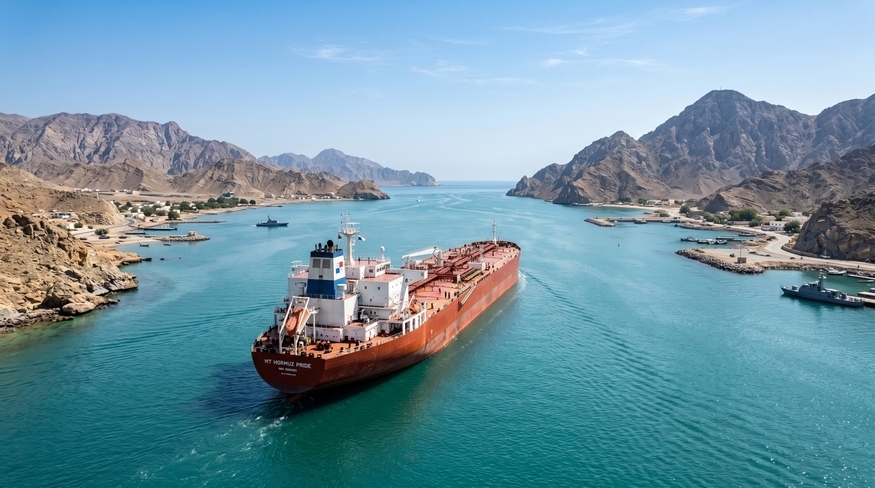
South Korea is stepping up enforcement of a fuel price cap as global oil markets face renewed volatility following disruptions tied to tensions around the Strait of Hormuz, a critical chokepoint for the world’s energy supply.
The government’s move reflects growing concern in Seoul over the country’s vulnerability to external energy shocks. Heavily reliant on crude imports, South Korea has moved quickly to contain rising domestic fuel costs after global prices surged, introducing a price ceiling on refinery supply earlier this month.
But the policy has exposed friction between government intervention and market behavior. Despite lower wholesale prices following the cap, hundreds of gas stations have either delayed price cuts or raised prices outright, undercutting the policy’s intended effect.
Officials say roughly 200 stations increased fuel prices after the cap took effect on March 13, with some raising gasoline and diesel prices by as much as $1 per gallon. The response has prompted authorities to escalate oversight, framing the issue not simply as price resistance but as potential market distortion.
Industry Minister Kim Jung-kwan outlined a three-step enforcement strategy that begins with publicly identifying stations that maintain elevated prices, a move designed to steer consumers away. Stations that fail to adjust could face tax audits and investigations into practices such as hoarding or collusion, with further penalties possible if violations are confirmed.
The Ministry of Trade, Industry and Energy has acknowledged the limits of direct price control. Retail fuel pricing has been deregulated since 1997, meaning authorities cannot penalize stations solely for setting higher prices. Instead, enforcement is focused on illegal or unfair practices tied to pricing behavior, including supply manipulation or the sale of non-compliant fuel.
Early data suggests the policy’s impact has been uneven. While refinery supply prices fell by more than $0.25 per gallon after the cap was introduced, retail prices declined more modestly, dropping $0.16 for gasoline and $0.22 for diesel. The gap highlights the lag between wholesale adjustments and consumer pricing, as well as the possibility of strategic pricing by station operators.
To tighten control, the government plans to monitor all gas stations nationwide using real-time pricing data, working alongside a long-standing civic watchdog group. Authorities believe some operators may be maintaining higher prices by holding pre-cap inventory or structuring operations to preserve margins despite lower input costs.
More than 86% of stations have reduced prices in line with the policy, but a minority has held firm or moved higher, underscoring the challenges of enforcing price controls in a liberalized market.
The episode illustrates how quickly global energy disruptions can ripple through import-dependent economies, and how governments may be forced to intervene even where markets are largely deregulated. For South Korea, stabilizing fuel prices has become an immediate priority as policymakers seek to shield consumers from the effects of escalating geopolitical risk.