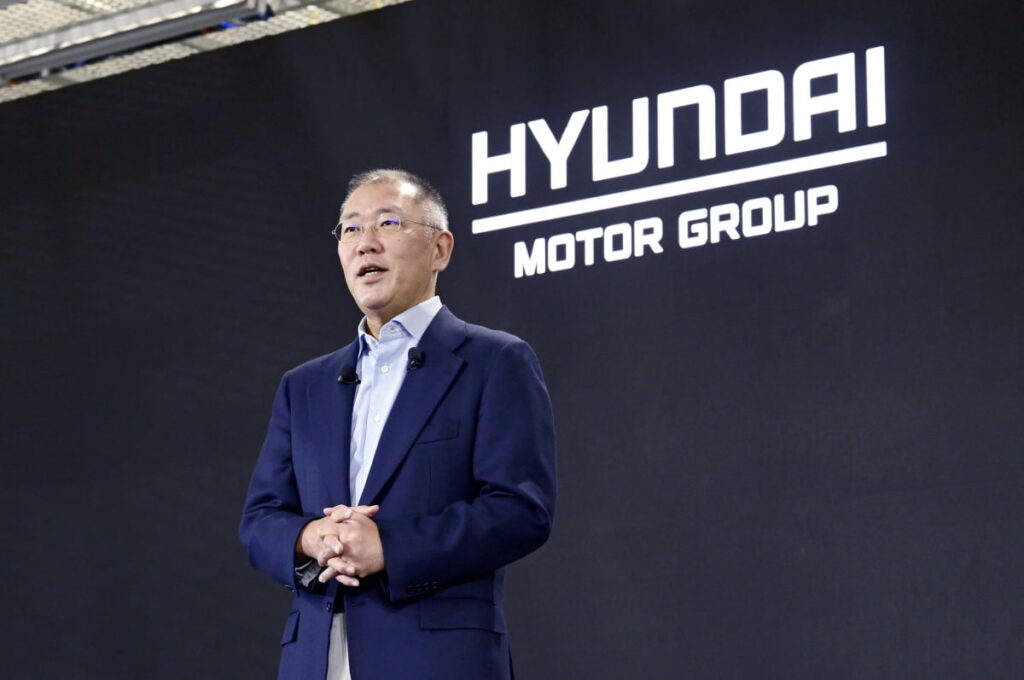
Chung Euisun, chairman of Hyundai Motor Group, received about $4.0 million in compensation from Kia in 2025, according to the company’s annual report released March 12 (local time).
The filing showed Chung received $2.0 million in salary and $2.0 million in bonuses, marking the first time he has been paid directly by Kia.
In previous years, Chung received compensation from other group affiliates, including Hyundai Motor Company and Hyundai Mobis.
Excluding Hyundai Motor, which has yet to release its annual report, Chung’s combined compensation from Kia and Hyundai Mobis totaled about $6.3 million in 2025.
Kia said the compensation reflects Chung’s role in strengthening the company’s competitiveness and sustaining record financial performance since he was appointed an internal director in March 2019.
The automaker added that compensation began last year as part of efforts to reinforce management accountability amid rising geopolitical uncertainty, shifting global trade conditions, and intensifying competition in future mobility technologies.
Kia Chief Executive Officer Song Ho-sung received about $2.3 million in total compensation, including $1.1 million in salary and roughly $1.2 million in bonuses and other payments, representing a 5.7% increase from a year earlier.
Chief Safety and Health Officer Choi Jun-young received about $1.7 million, while Executive Vice President Kim Seung-jun was paid roughly $580,000.
Kia said it produced 2.85 million vehicles in 2025, with global factory utilization reaching 91.6%.
The company’s plant utilization had fallen to 74.5% in 2020 during the COVID-19 pandemic but rebounded to 91.1% in 2022, 98.5% in 2023, and 94.4% in 2024.
By region, utilization rates last year were 100.1% in South Korea, 102.3% in the United States, 87.2% in Slovakia, 72.0% in Mexico, and 72.9% in India.
Average vehicle prices also rose across most segments. Domestically, passenger vehicles averaged $27,700, while recreational vehicles averaged $35,000.
Overseas, passenger vehicles averaged $30,200, while recreational vehicles averaged $50,200, reflecting stronger demand for higher-priced models in global markets.