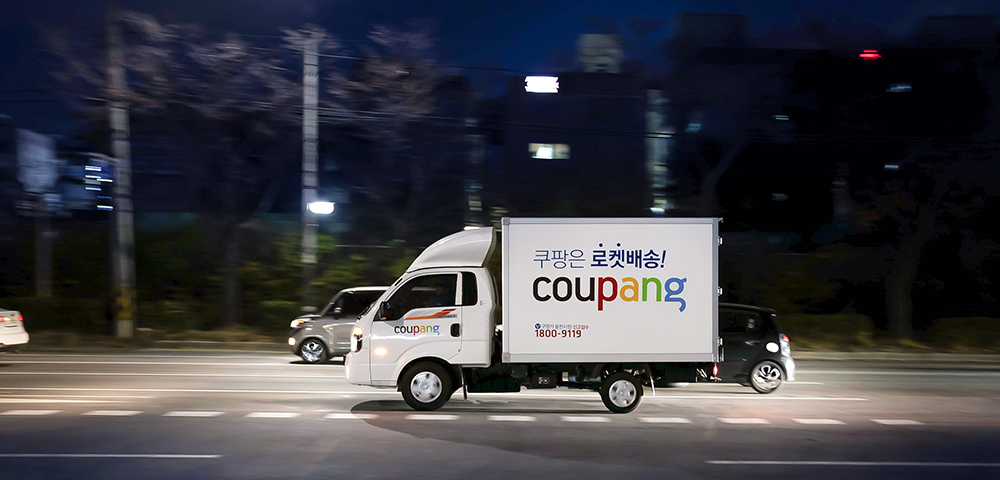
South Korea’s debate over a proposed ban on “super late-night” delivery services is intensifying, as labor unions, e-commerce giants, and logistics companies clash over whether the plan protects workers or hurts consumers.
The controversy began after the parcel delivery union under the Korean Confederation of Trade Unions (KCTU) proposed in late October that all deliveries between midnight and 5 a.m. be suspended to safeguard workers’ rest and health. But other labor groups, including Coupang’s in-house union, and consumer organizations pushed back, arguing that such a ban would harm livelihoods and convenience.
However, industry officials and analysts say the real issue isn’t whether late-night deliveries should be banned — it’s the unsustainably low delivery fees driven largely by Coupang’s aggressive logistics model.
“The core problem is Coupang’s high-volume, low-price structure, which forces longer hours and heavier workloads,” one logistics industry source told Yonhap News. “The debate has shifted toward worker health versus consumer convenience, but that misses the real point.”
Coupang, often called “the Amazon of Korea,” revolutionized the market with its Rocket Delivery system, which promises next-day or even same-day arrival. But unlike rivals such as SSG.com or Market Kurly — which cap order volumes and use AI to manage workloads — Coupang relies on massive overnight shipping operations to maintain speed, while keeping per-package fees below $0.70.
“Night delivery fees at Coupang average around $0.65 per parcel, less than half the roughly $1.40 paid by other platforms,” another official said. “Total pay may look high because of volume, but drivers must deliver far more to earn the same.”
A 2024 survey by the National Courier Workers’ Union found that Coupang delivery workers’ nighttime commission rates averaged $0.60 per parcel for apartments and $0.70 for other addresses. Despite an 8% increase in workload compared with the previous year, their average income actually fell about 2%.
Coupang drivers typically work three overnight shifts — starting at 8:30 p.m., 12:30 a.m., and 3:30 a.m. — sorting and loading packages before heading out for deliveries. Many say the schedule leaves little room for rest.
“The job itself isn’t unbearable, but pay keeps dropping,” said one female delivery driver with more than four years of experience. “If rates were fair, there would be far fewer cases of overwork or injuries.”
She added that while Coupang’s revenues keep rising, “drivers feel like disposable labor,” expressing frustration that the company and its contractors reap the biggest gains.
Consumer groups, however, warn that banning overnight delivery could have “broad social and economic consequences,” disrupting small businesses and limiting logistics flexibility. Coupang’s in-house union also opposes the proposal, claiming it would “cost thousands of drivers and warehouse workers their jobs.”
E-commerce experts note that the debate comes as South Korean retailers intensify their quick commerce competition — promising delivery within one to two hours of ordering.
“A blanket ban on early-morning delivery isn’t realistic,” said one industry analyst. “What’s needed is pricing reform and smarter workload management, not another regulation that punishes efficiency.”
The parcel workers’ union maintains that better scheduling could reduce fatigue without banning deliveries altogether — for instance, allowing morning drivers to skip sorting duties and begin deliveries immediately.
“If rates and workloads are made fair, both worker welfare and consumer convenience can coexist,” the union said in a statement.