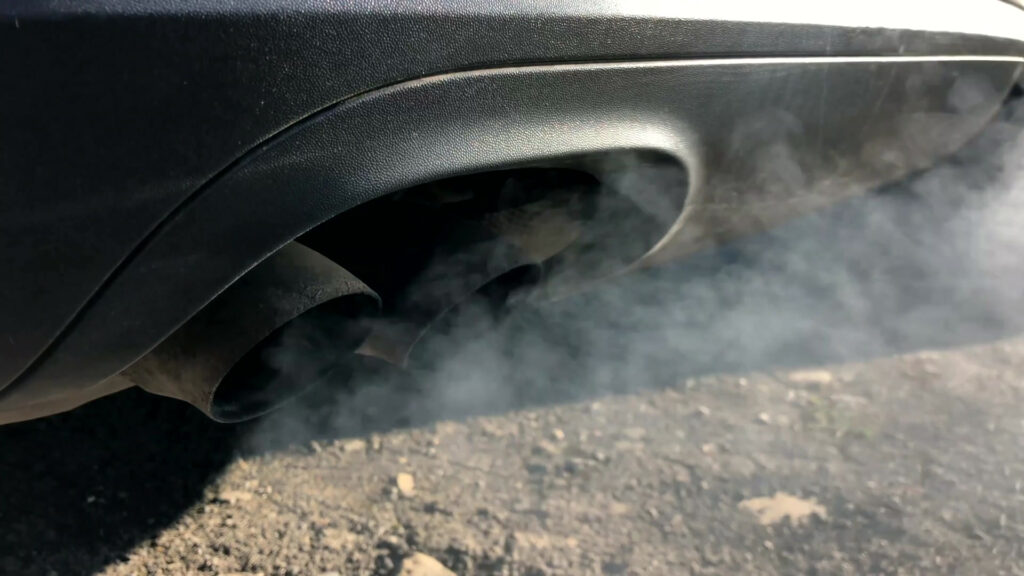
South Korea’s aggressive decarbonization drive is accelerating the retreat of diesel-powered vehicles, with new diesel registrations falling below 100,000 units for the first time last year, according to industry data.
The sharp decline highlights how government-led climate policy, tighter emissions standards and strong incentives for cleaner vehicles are reshaping one of Asia’s most advanced auto markets.
Data from the Kaizuyu Data Research Institute show that total diesel vehicle registrations, including passenger cars and commercial vehicles, fell to 97,671 units in 2024, a 31.8% drop from 143,134 units a year earlier.
Diesel vehicles accounted for just 5.8% of all new vehicle registrations, marking a historic low. As recently as the mid-2010s, diesel cars represented nearly half of South Korea’s auto market. In 2023, diesel’s share fell into single digits for the first time, at 8.7%.
By fuel type, diesel vehicles ranked fifth last year, behind gasoline vehicles (767,937 units), hybrids (452,714 units), electric vehicles (220,897 units) and LPG-powered vehicles (136,506 units). Diesel registrations were less than half the number of electric vehicles sold, underscoring the scale of the shift toward electrification.
Once prized for fuel efficiency and high torque, diesel vehicles gained widespread popularity during the 2010s. That appeal has steadily faded as South Korea tightened emissions regulations in line with its carbon-neutrality goals and expanded subsidies for electric and hybrid vehicles.
Diesel registrations peaked at 963,000 units in 2015 before entering a prolonged decline. Annual registrations fell to 873,000 in 2016, 821,000 in 2017, 793,000 in 2018, 657,000 in 2019, 596,000 in 2020, 430,000 in 2021, 350,000 in 2022, 309,000 in 2023 and 143,000 in 2024—roughly one-tenth of the level recorded a decade earlier.
Market share followed a similar trajectory, sliding from 47.9% in 2016 to 44.8% in 2017, 43.4% in 2018, 36.6% in 2019, 31.2% in 2020, 24.8% in 2021, 20.8% in 2022, 17.6% in 2023 and 8.7% in 2024.
The government is expected to accelerate the transition further. The Ministry of Climate, Energy and Environment is preparing to formalize a policy requiring automakers and importers to ensure that at least half of new vehicle sales by 2030 consist of electric or hydrogen-powered models, positioning South Korea among the most aggressive markets globally in pushing zero-emission vehicles.
The impact is expected to be most pronounced in the commercial vehicle segment, once a stronghold for diesel. Automakers are scaling back diesel-powered trucks and vans and replacing them with electric alternatives, including purpose-built vehicles designed for logistics and urban delivery.
“Diesel vehicles are clearly being phased out in Korea,” an automotive industry official said. “Stricter regulations are cutting production volumes, and consumers increasingly see diesel as inconvenient and out of step with future mobility. The pace of decline is likely to accelerate.”
South Korea’s diesel downturn reflects a broader global shift, but the speed of the transition underscores the country’s role as a front-runner in decarbonization, as governments and automakers race to meet climate targets through electrification and cleaner transportation technologies.