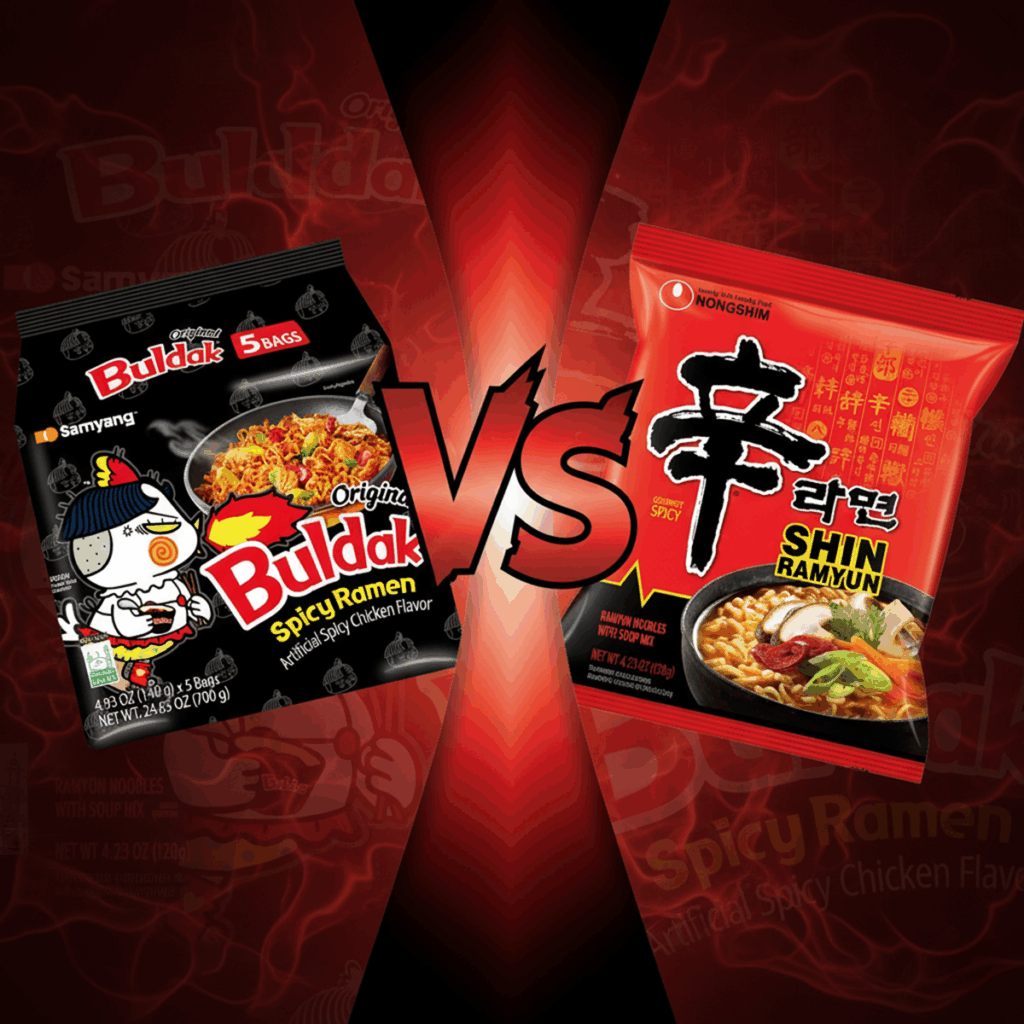
South Korea’s instant noodle titans, Nongshim and Samyang Foods, are entering a high-stakes global match that’s redefining the balance of power in the country’s ramen market. After decades as the undisputed leader, Nongshim now finds itself racing to keep pace with Samyang—the brand behind Buldak Spicy Ramen, the viral noodle that turned heat into a global phenomenon.
Nongshim, known for Shin Ramyun, has begun labeling 18 export products with the phrase “Korea No.1,” a rare show of corporate pride. The campaign, paired with a new global slogan, “Spicy Happiness In Noodles,” comes as Samyang’s global sales surge threatens its long-held dominance. Founded in 1965 and celebrating its 60th anniversary this year, Nongshim says it will boost annual revenue to $5 billion by 2030 and raise its operating margin to 10%, up from 6.3% in the first quarter of this year.
That ambition underscores a widening gap in momentum. Over the past year, Samyang’s stock has tripled to $950, while Nongshim’s rose just $4 to $276. Samyang’s operating profit margin hit 25%, more than four times higher than its rival’s. From 2022 to 2024, Samyang’s revenue jumped by more than $545 million, compared with Nongshim’s $246 million gain.
The real divide is in global reach. Samyang now generates about 80% of its revenue from overseas markets, while Nongshim’s share remains below 40%. “Domestic ramen demand has leveled off,” said a food industry official. “With price controls and resistance to higher prices, companies can’t grow unless they go abroad.”
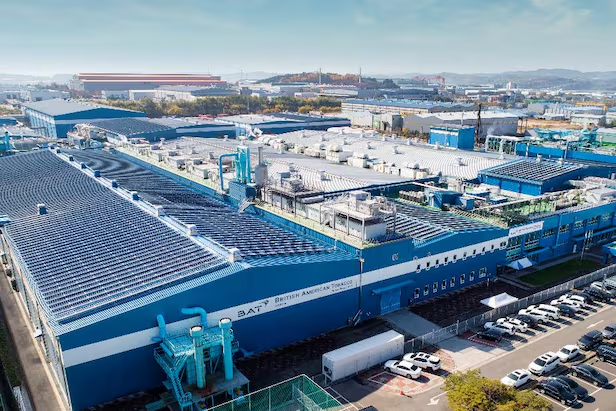
Nongshim’s answer is infrastructure. The company broke ground this May on a new export-only factory in Busan, designed to produce 500 million additional ramen packs per year. It also established Nongshim Europe in Amsterdam to strengthen sales across France, Germany, and the U.K. Meanwhile, Samyang is expanding production at breakneck speed, planning to complete its first overseas factory in China by 2027 while already running a second domestic plant in Miryang—its second in just over three years.
The two companies now represent different strategies for the same goal. Nongshim is betting on scale, brand heritage, and a unified global identity. Samyang is betting on speed, virality, and the enduring power of the Buldak brand.
In Korea, the rivalry has evolved into more than a business contest — it’s a test of how Korean food brands compete on a global scale. The outcome will show whether longevity or virality defines the next phase of K-food’s rise.