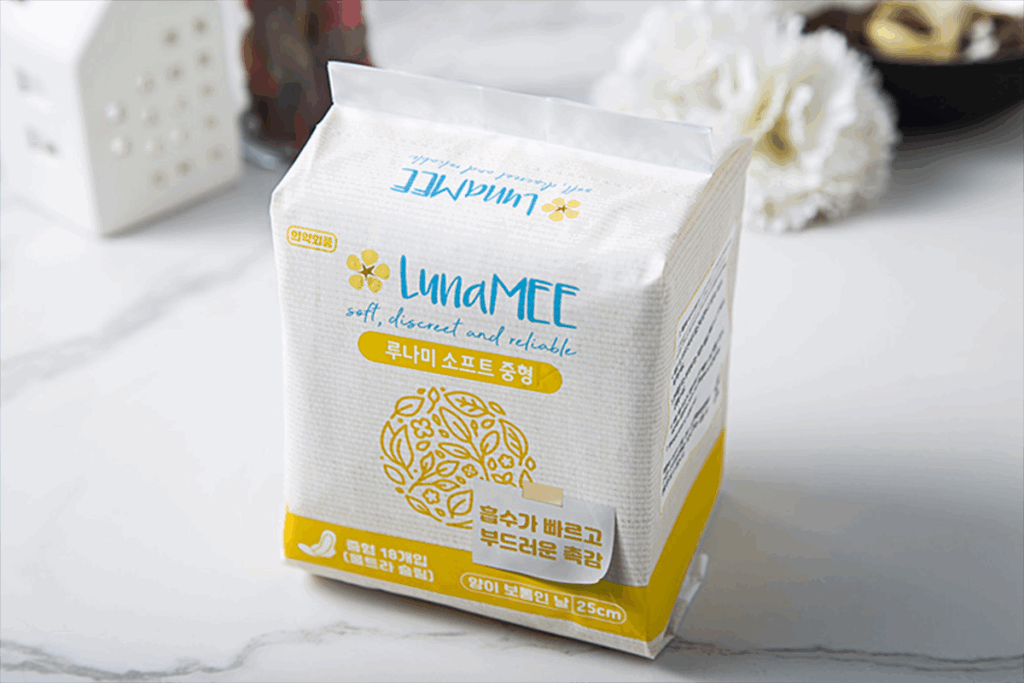
The price of sanitary pads is rarely a catalyst for market disruption. In South Korea, it became one almost overnight.
What changed was not consumer demand or raw-material costs, but a political signal. When President Lee Jae-myung publicly questioned why sanitary pads cost as much as 40% more domestically than in overseas markets, he pointed not to factories but to distribution margins. That distinction mattered. Within days, retailers began dismantling pricing structures that had long gone unchallenged.
The episode offers a clear case study of how political pressure can accelerate market mechanisms familiar in the U.S.—private labels, direct sourcing and margin compression—but at a pace rarely seen in mature consumer categories.
Manufacturers reacted first, announcing expansions of mid- and low-priced product lines, a defensive move aimed at signaling flexibility before regulatory tools were even discussed. The real adjustment, however, came from retailers, where pricing power is concentrated.
At Coupang, the country’s dominant online platform, its private-label arm cut prices on Lunamy-brand sanitary pads by up to 29%, pushing unit prices down to roughly seven cents. The response was immediate and extreme: orders surged as much as 50-fold, and nearly two months of inventory sold out in two days. For a basic household necessity, the reaction underscored how much latent price sensitivity had been masked by stable margins.
Coupang framed the move not as a promotional tactic but as part of a broader shift toward value-driven essentials, using scale and private-label control to reset pricing expectations. The strategy closely mirrors playbooks long used by Amazon and Walmart—only here, the trigger was political scrutiny rather than competitive escalation.
Offline retailers moved in parallel. Convenience-store chains rolled out aggressive bundle promotions, while E-Mart took a more structural approach. Through its No Brand private label, E-Mart began selling sanitary pads at prices roughly 30% below national brands, with mid-size pads priced near eight cents per unit.
The retailer attributes the savings to direct manufacturer sourcing and the removal of wholesale intermediaries and advertising costs. The message was explicit: margin layers, not materials, were the primary source of price inflation. E-Mart also emphasized product quality, highlighting cotton-blended materials to counter assumptions that private-label affordability comes at the expense of performance.
Not all retailers have moved as aggressively. Some chains have opted to observe rather than commit to private-label expansion, suggesting the market is still testing how durable the new price floor will be once political attention fades.
What makes the episode notable is not the discounts themselves, but how quickly pricing behavior shifted once distribution margins became a political target. In the U.S., similar scrutiny—over prescription drugs, infant formula or feminine hygiene—has often unfolded through hearings and prolonged negotiations. In South Korea, the adjustment was market-led and almost immediate.
For retailers, the implication is clear. Once margins are publicly identified as the problem, defending them becomes harder than abandoning them. And for policymakers, the episode demonstrates that signaling alone—without formal intervention—can be enough to reorder pricing power in consumer markets.
Whether sanitary pads are an isolated case or a preview of broader pressure on other everyday goods remains an open question. What is already clear is that a category once considered immune to disruption has been pulled into a structural reset, driven by the convergence of politics and private-label economics.