The South Korean auto giants secured over 1,300 patents in China last year, targeting next-generation batteries, hydrogen infrastructure and robotics in a strategic push to fortify their position in the critical market
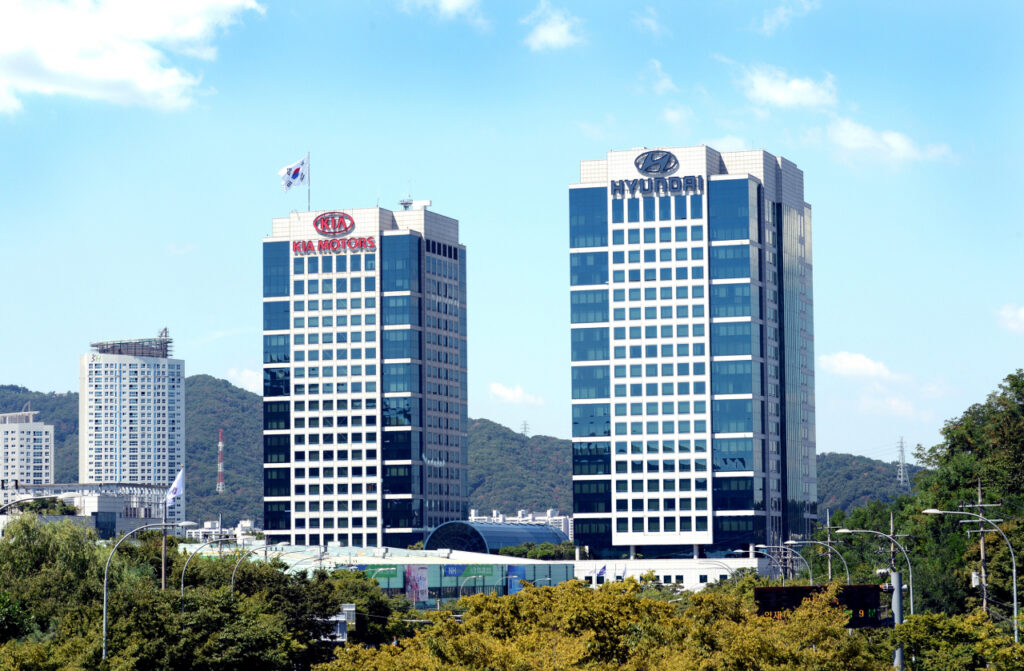
Hyundai Motor Co. and its affiliate Kia Corp. are mounting a deliberate campaign to secure their technological future in China, amassing a trove of patents in fields seen as central to the next era of automotive competition. The move underscores a strategic pivot by global automakers to treat the world’s largest car market not just as a sales floor, but as a crucial arena for intellectual property dominance.
The two automakers received approval for a combined 1,317 patents in China last year, according to data from the country’s National Intellectual Property Administration. The filings, which ranged from 77 to 181 per month, were concentrated in electric-vehicle technologies, hydrogen mobility systems and robotics—a clear mapping of the group’s long-term priorities.
“For global automakers, competing in China now means competing on the technology frontier,” said Lee Hang-koo, senior researcher at the Korea Automotive Technology Institute. “Hyundai’s patent surge is a defensive and offensive move: protecting core R&D while establishing a legal moat in key growth sectors.”
One of the most significant approvals centers on a breakthrough in battery chemistry. Hyundai and Kia, in a joint filing with South Korean chemical firm Hansol Chemical, patented a novel composite cathode material for all-solid-state batteries. The design features a lithium metal oxide core encased in a sulfide-based solid electrolyte shell, an architecture aimed at solving the persistent issue of instability between the electrode and electrolyte—a major barrier to commercializing the next-generation power source.
“The patent directly tackles the twin challenges of high interfacial resistance and limited cycle life,” said Park Chul-wan, a battery technology professor at Seojeong University. “It’s a clear indicator that Hyundai is preparing for the post-lithium-ion battery era, and doing so through strategic partnerships.”
In the realm of hydrogen, the companies focused on the digital backbone required for safe, widespread adoption. Approved patents include a secure communication protocol for hydrogen refueling stations based on public-key infrastructure and an intelligent fuel supply system managed by automated protocols. These technologies are designed to prevent cyberattacks and ensure reliable authentication, forming a critical layer of infrastructure needed to scale hydrogen-powered trucks and commercial fleets.
The patent portfolio also reveals growing investment in automation. One approved patent covers a “pruned-model” robot control system that uses simplified algorithms to slash computational demands, enabling faster and more efficient robots for factory floors and warehouses. Another outlines key structural components for wearable exoskeletons, pointing to potential applications in reducing physical strain for industrial workers.
Notably, a substantial portion of the patents were filed jointly with supplier partners, including NVH Korea for specialized vehicle piping systems and Nifco for lightweight interior components. This collaborative approach, analysts say, allows Hyundai to leverage specialized expertise while spreading development risk.
“Hyundai is walking a dual path: deep collaboration on component-level innovation while fiercely guarding system-level architectural knowledge,” said Kim Pil-soo, an automotive engineering professor at Daelim University. “The solo patents on battery design and vehicle network security show they are internalizing the crown jewels of their R&D.”
The aggressive intellectual property push comes as Chinese automakers rapidly close the technology gap, particularly in EVs, forcing foreign players to double down on innovation to maintain relevance. By securing a dense web of patents in China, Hyundai Motor Group is not only protecting its own inventions from replication but also positioning itself to license technologies or forge cross-licensing agreements in the future.
“The battle in China is no longer just about market share this quarter,” said Mr. Lee of the Korea Automotive Technology Institute. “It’s about who controls the standards and the blueprints for the technologies that will define the next decade. These patents are Hyundai’s claim to a seat at that table.”