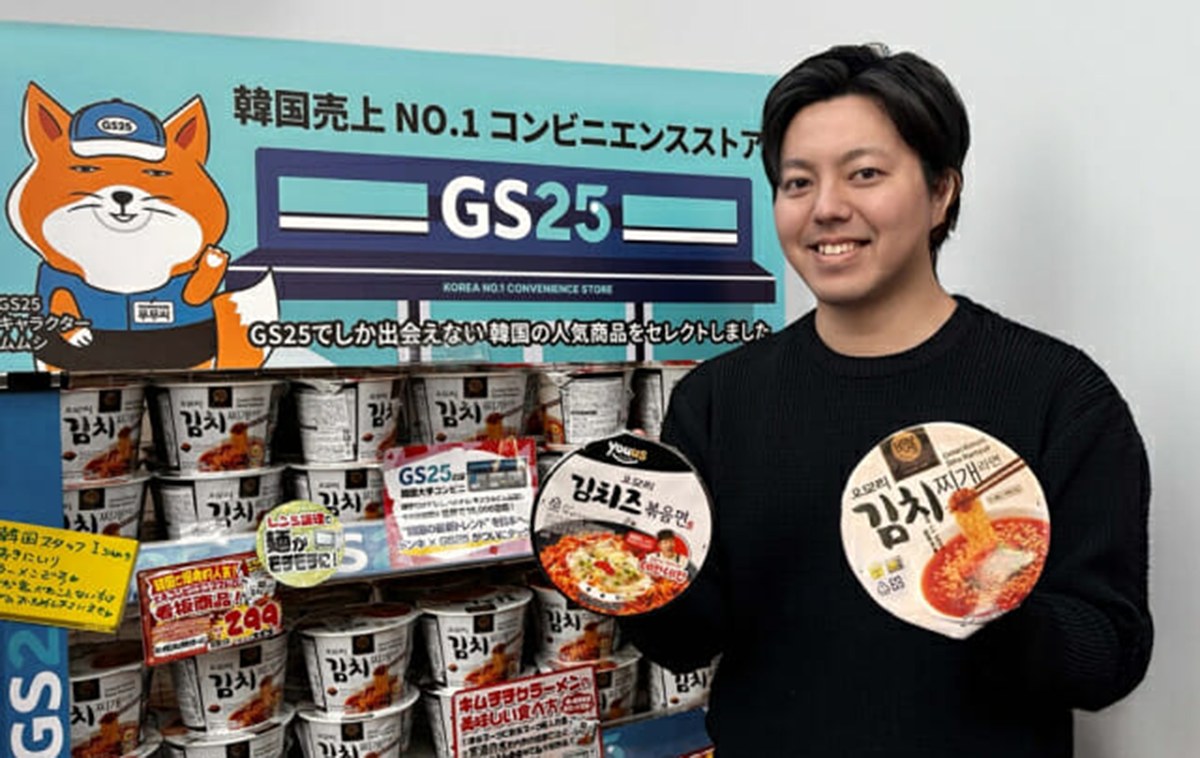
GS25, one of South Korea’s largest convenience-store chains, is taking its private-label ambitions abroad by launching its house-brand ramen in Japan, a market widely regarded as the world’s most competitive for instant noodles.
The company has begun selling its “Omoni” ramen nationwide through 485 outlets of Don Quijote, a Japanese discount retailer known for experimenting with new mass-market products. For GS25, the move goes beyond opening a new export channel: it is an attempt to turn a domestic convenience-store label into a consumer brand with international recognition.
The Omoni line, built around kimchi-based flavors, has sold more than 100 million units in South Korea since its debut in 2014. Inside GS25 stores, it has consistently outperformed many manufacturer-branded cup noodles—an unusual achievement in a category long dominated by large food companies.
GS25 is operated by GS Retail, which has increasingly emphasized private-label development as margins in traditional convenience retail have come under pressure. Company executives say earlier exports of GS25-branded products to Don Quijote last year sold out faster than expected, encouraging both sides to broaden their partnership to include ramen, one of Japan’s most fiercely contested food categories.
The push into Japan comes as Korean instant noodles gain traction globally, riding a broader international appetite for Korean food. GS25 already exports the Omoni series to markets including the United States, the U.K. and Australia. The Japan rollout expands the brand’s footprint to 32 countries.
For GS25, success in Japan would serve as both a proving ground and a signal to other overseas distributors. Japan plays an outsized role in shaping global instant-noodle trends, and traction there could strengthen GS25’s position as it seeks additional international retail partners.
The two companies are now in talks to export additional private-label products beyond ramen, though specific categories and volumes have yet to be determined. GS25 plans to support the launch with in-store marketing aimed at positioning Korean ramen as a differentiated but mainstream option, rather than a niche import.
GS25’s overseas expansion has accelerated in recent years. The company began exporting products in 2017 and has steadily expanded both shipments and store operations abroad, with hundreds of convenience stores now operating in Vietnam and Mongolia. Management has set targets of more than 700 overseas stores by 2026 and 1,000 by 2027.
The Japan deal underscores a broader shift among Asian retailers, which are increasingly looking beyond store networks to build private-label products that can travel across borders—competing not only with local brands, but with global packaged-food companies.