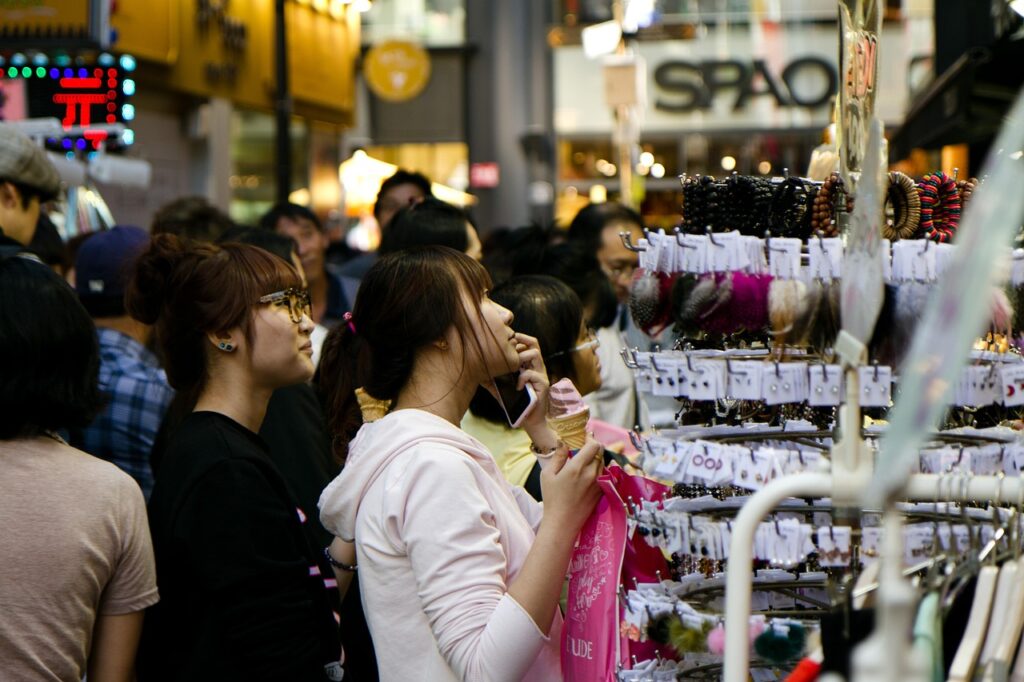
Foreign tourists are no longer just a seasonal tailwind for South Korea’s retailers. They are becoming a structural source of demand—one that is increasingly shaping store formats, marketing strategy and capital spending across the industry.
The shift comes as domestic consumption remains sluggish, leaving department stores and big-box chains more dependent on overseas visitors to support growth. Retail executives say the change is altering everything from product mix to customer-service design, as companies compete to capture spending that once flowed overwhelmingly into duty-free channels.
A weaker won has been a key driver. The currency advantage has encouraged visitors to spend beyond luxury handbags and watches, extending purchases into food, cosmetics and everyday goods. At the same time, duty-free shopping—long a defining feature of Korea’s tourist economy—has lost some of its dominance as pricing gaps narrow, pushing more spending toward department stores and large-format retailers offering immediate tax refunds and broader assortments.
That realignment is showing up in flagship store numbers.
Lotte Department Store said foreign-customer sales at its main Seoul location rose about 40% last year from the prior year, while its Jamsil branch posted roughly 25% growth. Shinsegae Department Store reported even sharper gains, with foreign sales climbing more than 80% at its main store and more than 50% at its Gangnam location. Hyundai Department Store said foreign sales increased close to 40% at two of its most prominent Seoul stores.
More telling than the growth rates is the change in the customer mix. At several flagship department stores, foreign shoppers now account for close to one-fifth of total sales—levels that until recently would have been unusual outside airport retail and downtown duty-free districts. In some locations, that share has crossed 20%, signaling a shift in the core customer base rather than a temporary tourism surge.
The trend is spreading beyond department stores.
Lotte Mart has redesigned its Zettaplex Seoul Station outlet specifically for international visitors, adding luggage storage, suitcase-packing stations, currency-exchange machines and self-service tax-refund kiosks. Foreign shoppers generated roughly 40% of the store’s revenue last year, the company said—an unusual figure for a format built around local household demand.
Retail executives say the momentum reflects how spending once concentrated in airport terminals and duty-free complexes is being absorbed by conventional retail. Immediate refunds, flexible promotions and wider product selections have helped department stores and big-box retailers capture purchases that were previously harder to reach.
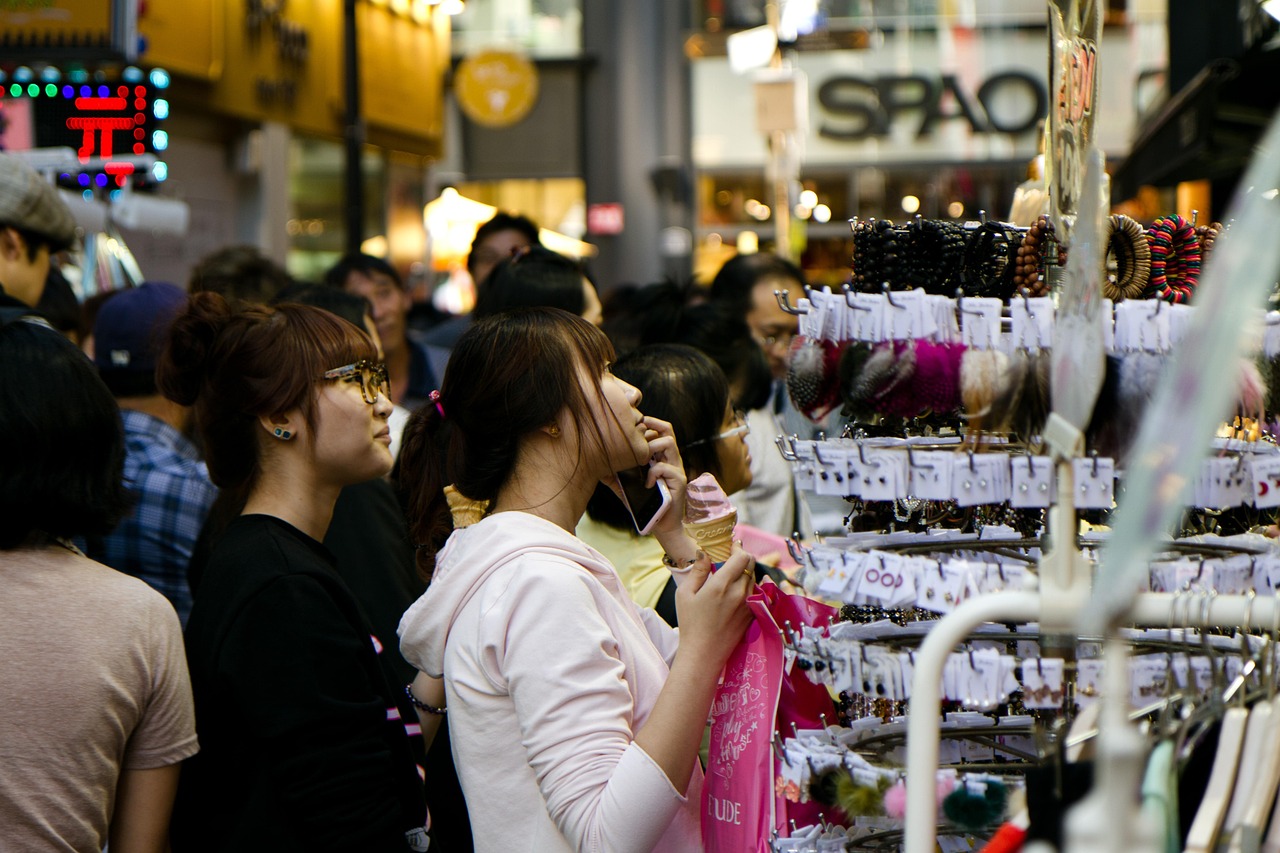
Brands are adjusting alongside them. Fashion platform Musinsa is expanding physical stores in tourist-heavy districts such as Myeong-dong and Seongsu, while outdoor and apparel brands including Kolon Sport are opening flagship locations designed to draw international foot traffic rather than neighborhood shoppers.
Analysts see foreign tourism as a stabilizing force for a sector facing structural headwinds at home. The Ministry of Culture, Sports and Tourism said foreign arrivals rose 14% last year to 18.5 million. Industry estimates point to further growth this year, supported by large-scale cultural events, including a planned BTS comeback performance in central Seoul.
For South Korea’s retailers, the implications are becoming difficult to ignore. Foreign tourists are no longer a peripheral audience. They are a demand base influencing store design, pricing tactics and investment priorities—and helping determine what the country’s retail market looks like in its next phase.