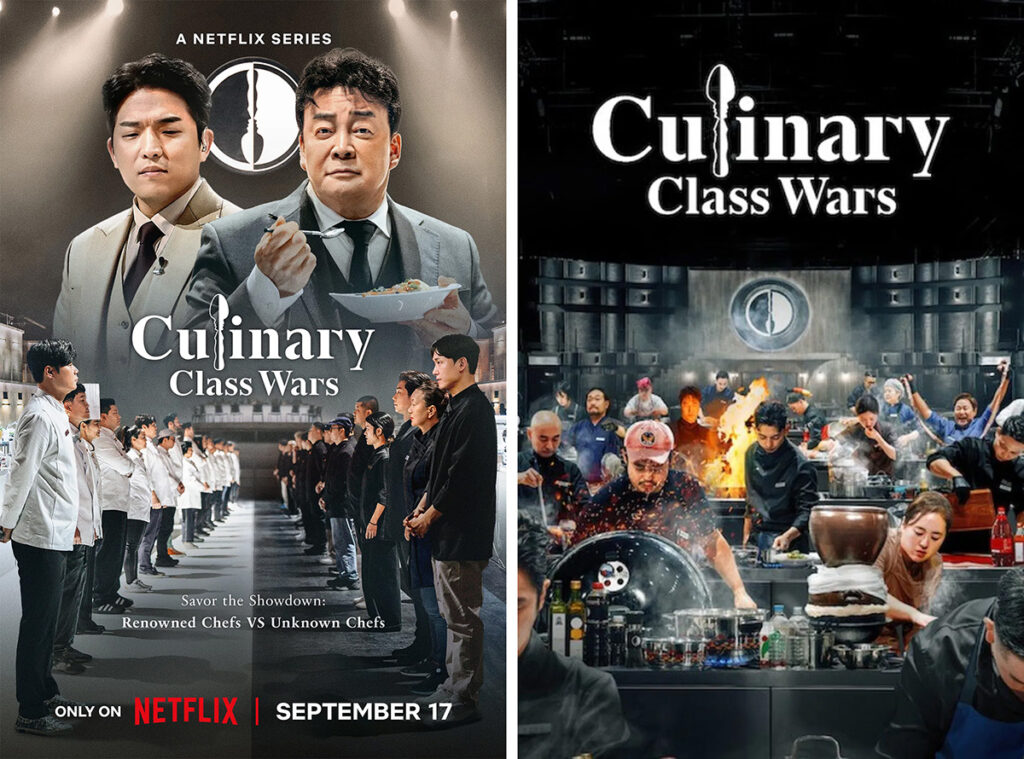
Culinary Class Wars 2 returned this month under a cloud of uncertainty. One of its best-known judges, Baek Jong-won, had been mired in public controversy for much of the year, prompting online calls for boycotts and raising questions about whether the show’s second season could maintain its momentum.
The early numbers point to a different conclusion. According to data released by Netflix, the series recorded 5.5 million views worldwide in its first week, from Dec. 15 to 21. It ranked No. 1 globally among non-English television programs and entered the top 10 in 12 countries, including South Korea—about a 50 percent increase from the first season’s debut.
For Netflix, the result reflects the growing durability of established unscripted franchises. “Culinary Class Wars,” which stages a hierarchical cooking competition between lesser-known chefs and elite culinary figures, was renewed for a second season immediately after its first finale. By the time the new season premiered, its identity appeared to rest more on format and audience familiarity than on any single personality.
That resilience was tested months before release. Beginning in April, Baek Jong-won faced a series of disputes involving his food business, including allegations related to product quality, food sanitation and internal management. Critics questioned his credibility as a judge and warned that the controversy could undermine the show’s global reception.
Netflix and the production team chose not to remove him, opting instead for a low-key recalibration. His on-screen introduction was pared back, and the editing avoided emphasizing his public image. The judging format itself remained unchanged, and contestants in early rounds openly expressed confidence in his assessments. The controversy, in effect, became a risk to be managed rather than a narrative to foreground.
Industry observers say the outcome underscores a familiar pattern in competition television. Cooking shows with loyal audiences tend to be less vulnerable to short-term scandals, particularly when the core mechanics remain intact. In this case, blind tastings, head-to-head eliminations and judge disagreements—often played for humor—helped keep attention on the contest rather than the controversy.
Still, analysts note that the season is not without structural trade-offs. Many of the so-called “Black Spoon” contestants already run established restaurants or possess industry reputations, diluting the underdog arc that fueled emotional investment in the first season. The competition leans more heavily on professional rivalry and technique than on personal transformation.
Even so, the show’s reach has extended beyond viewership metrics. In South Korea, it topped weekly television and streaming attention rankings, while restaurant reservation platforms reported surges in interest for establishments run by participating chefs.
With 13 episodes planned and the series now past its midpoint, the question is less whether “Culinary Class Wars 2” can withstand controversy—it already has—and more whether its refined rules and sustained intensity can carry the season to a durable finish. For Netflix, the message is clear: a mature global format can absorb reputational risk and still expand its audience.