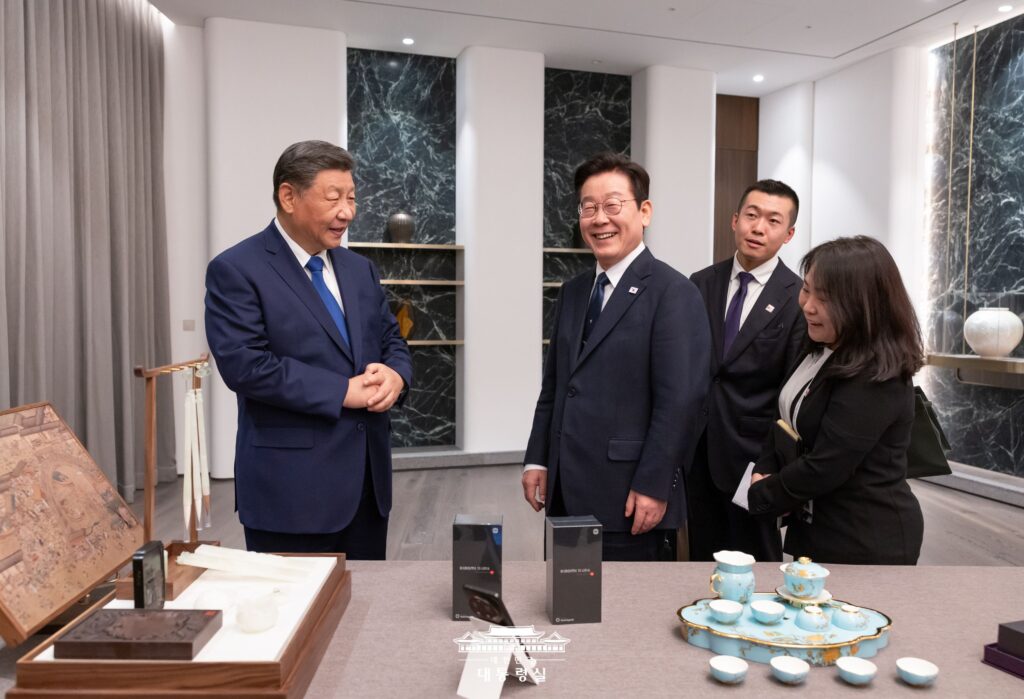
When Chinese President Xi Jinping handed South Korean President Lee Jae-myung two Xiaomi 15 Ultra smartphones during the China–South Korea summit held on the sidelines of the APEC Leaders’ Meeting in Gyeongju, the gesture seemed routine — until one detail emerged: the phones’ displays were made by Samsung Display.
The Xiaomi 15 Ultra, a high-end model developed with German camera maker Leica, is one of China’s most advanced smartphones. But the fact that its screens come from a South Korean supplier underscores a reality both leaders understand — even as their nations compete in technology, they remain deeply connected through supply chains.
For Beijing, gifting a product that integrates Korean components may have been a quiet acknowledgment of that interdependence. For Seoul, it was a reminder that its tech giants like Samsung still play a critical role in China’s hardware ecosystem, even amid U.S. export controls and rising geopolitical tension.
The phone itself is impressive. It features a 1-inch main sensor, Leica optics, and a periscope zoom lens capable of up to 200mm magnification. Priced at about $1187 in Korea, it targets the same premium market as Apple and Samsung’s flagship models — both of which dominate the global smartphone scene.
After the gift exchange, Xi reportedly joked that Lee should “check if there’s a backdoor,” referring to Western suspicions that Chinese electronics could be used for surveillance. The exchange drew laughs, but the symbolism lingered: even in a moment meant to show goodwill, the lines between cooperation, competition, and mistrust in global tech were on full display.