Royal Canadian Navy and NAC: “Germany and NATO are our Partners”
“Korea must take the lead with fast delivery and superior performance”
Submarines have long been something of an afterthought in Canadian national defense policy. In the 1960s, they simply leased some from the U.S navy, before acquiring outdated Oberon-class vessels from the U.K. to maintain a bare-minimum capability.
However, the situation changed fast – Russia and China are assertively expanding their presence in the Arctic while the security umbrella formed with the U.S. began wavering. Now, even for the Canadians, submarines are no longer a good-to-have but a must-have for survival.
The CPSP(Canadian Patrol Submarine Project), the single largest procurement in the history of the Canadian navy, marks a pivotal shift – Canada has effectively declared submarines are at the core of the national defense strategy, not on the periphery.
Korea and Germany are the two remaining competitors, locked in a fierce head-to-head for the massive contract. Each side presented proposals beyond the joint national security, to a wide range of industrial cooperation spanning mining, energy and automotives.
The game is in effect a lot more than a security deal – it is a nation-to-nation pact. The Guru traveled to Canada where the final decision is soon to be made, to capture the tension on the ground – Editor’s Note
“Canada is a member of NATO.”
This simple premise, shared by the Royal Canadian Navy and the Naval Association of Canada (NAC), encapsulates the stark reality facing South Korea’s CPSP bid. Canada and Germany, the two members of the same pact, are deeply intertwined both in terms of economy and national security. For Canadians, Germany is a country which they can easily relate to and become familiar with. Korea is not. K-food or K-culture may be but K-defense? ‘Strange’ would be a modest choice of word. The Korean bidders – or the K-One Team – are facing a huge hurdle of overcoming the alliance-bound ties. They are fighting an uphill battle.
◇NATO Alliance: The Game Changer for the CPSP Bid
Tim Addison, President of NAC’s Ottawa branch emphasized “Canada has always been a strong member and partner of NATO” during the interview with The Guru on the 11th. “The trans-atlantic allies have traditionally supplied weapons to us. That said, acquiring a submarine from across the Pacific seems like an uncharted territory. I cannot say for sure, but it could be only natural that Canada gravitates towards the decades-old ally(Germany) when selecting the next strategic asset to add.”
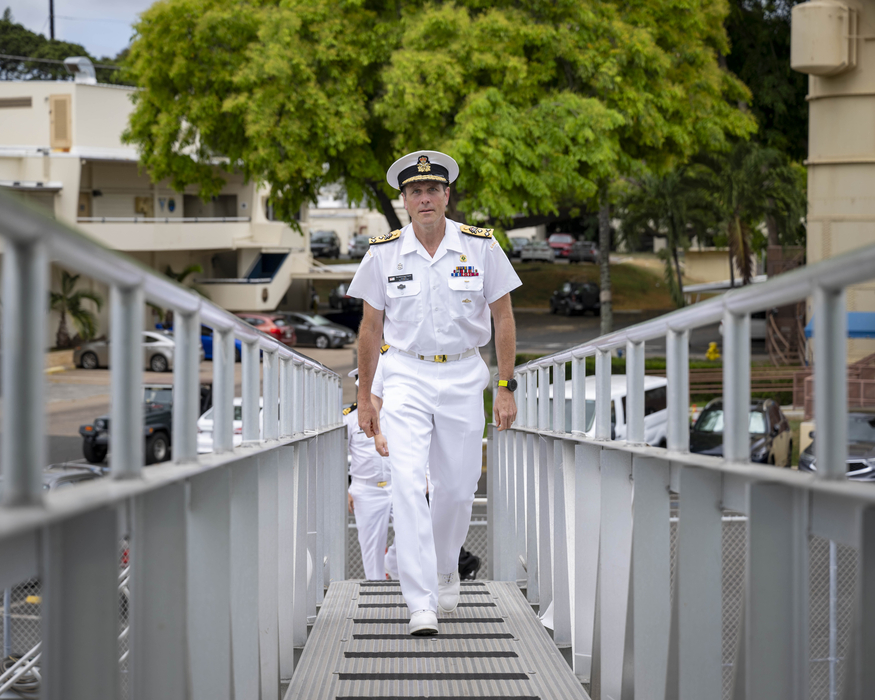
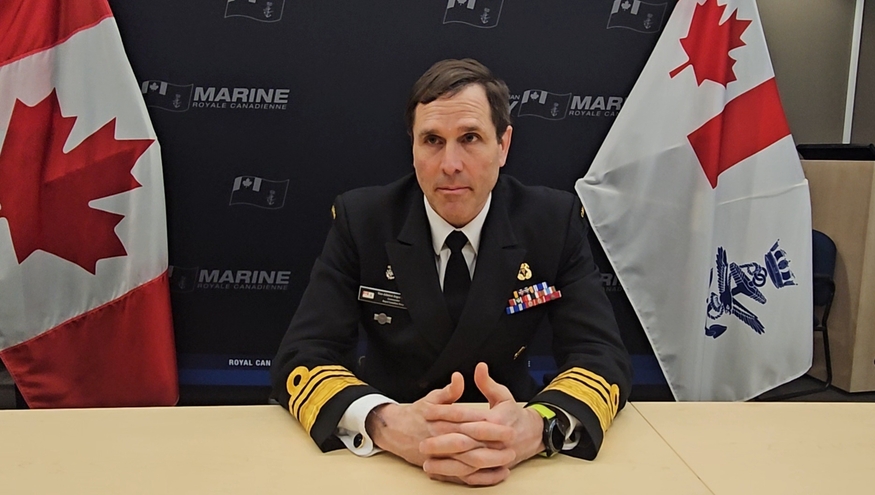
Angus Topshee, commander of the Royal Canadian Navy, also highlighted the ties between the allies during the interview. “Germany and Norway are NATO allies, and Canada has maintained a close relationship with our European partners throughout history,” he noted, indicating the barrier Hanwha must overcome is significantly high.
But “at the same time” he continued, “we Canadians are proud that we fought in the Korean War.” He added by saying “we are as much a Pacific nation as an Atlantic one, having to pay attention to the presented cases from both bidders in terms of geopolitical stakes.” Making the final choice is more than difficult, he said.
Canada is one of the 12 founding members of NATO. Germany, another one of the 12, has maintained close economic and strategic ties with Canada ever since. In fact, Germany is the largest trading partner of Canada within the EU, too. After the 2017 CETA between Canada and the EU, the trade volume of the two nations soared more than 40%.
It is important to point out that the main battle tank of the Canadian army is the German-made Leopard 2. In September 2024, KNDS, a German-French JV, signed a $1.4B maintenance contract with the army, consolidating the cooperative modernization process of the military force.
◇ Korea Needs a Decisive Edge
To no surprise, TKMS is building its case on the basis of the NATO alliance. It is emphasizing that the company has a track record of supplying many submarines to other allies including Germany and Norway, thus asserting the prospective deal with Canada would further strengthen the already-proven trans-Atlantic ties. Paul Glaser, CFO of TKMS, said last month in the interview with Bloomberg, the recent ‘Greenland crisis’ bolstered solidarity among NATO allies, making the successful bid more likely.
Industry observers analyze that Hanwha must come up with a decisive edge in order to offset the NATO premium enjoyed by its rivals.
Addison noted “if the Korean team proves its capability to build more advanced submarines, deliver faster and showcase more potential in other criteria, they will gain favor of the Canadian government because it is ultimately ‘the best asset’ they are seeking, rather than the past ties.”
‘Delivery speed’ is a paramount factor for Canada, because the naval fleet currently consists only of 4 legacy submarines which had already at the point of purchase in the 90s retired from the U.K. navy. In the meantime, Russia’s ambition over the Arctic and the U.S’s territorial disputes over Greenland cause the security tension in Canada to surge, pressing the policymakers to fill in the strategic void as quickly as possible. Ottawa is looking to expedite the procurement process. Topshee also emphasized “the sooner the delivery, all the better.”
Korea offered they would complete the delivery process within 6 years, instead of originally presented 9 years. This is faster than what Germany has promised, serving as a major advantage for the Korean bidders.
The K-team has another mission: the Canadian evaluators are looking forward to widened industrial and technological benefits(ITB). The scorecard says the criterion called ‘Economic Benefits’ accounts for 15% of the total score. It is trailing behind ‘In-Service Support’(50%) or ‘Technical Specifications’(20%) but the same as ‘Financial State’(15%). It may not be an ultimate deciding factor but remains an unignorable variable, large enough to tip the scales. Topshee said “the submarines from both countries are more than adequate for the Navy”, signalling that the technical scores for both sides are neck-and-neck. He added “we are expecting a package which would benefit Canada as a whole.”
Minister Mélanie Joly of ISED also said, “We will maximize direct and indirect economic impacts by using the CPSP procurement.” She echoed, “We will support Canadian industries to participate in global value chains strongly and continuously, and help companies compete for high-value business contracts.”