
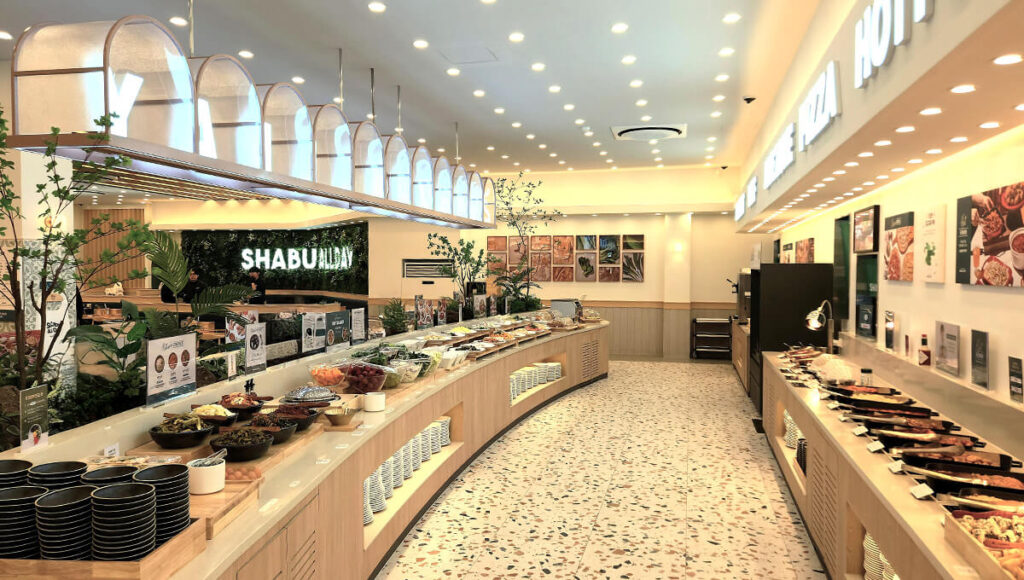
Jollibee Foods Corporation is deepening its push into global markets by acquiring established South Korean dining brands, signaling a strategy that leans on the international appeal of Korean food concepts.
The Philippine restaurant operator has agreed to acquire Shabu All Day, an all-you-can-eat shabu-shabu chain, for about $88 million, taking full ownership of its operator, All Day Fresh Co. The deal brings the Korean brand into Jollibee’s international portfolio as it seeks to scale concepts beyond their home market.
Shabu All Day operates 172 locations across South Korea and generated roughly $326 million in revenue last year. The chain’s nationwide footprint and steady customer traffic have helped it maintain a strong position in the country’s competitive hot-pot segment.
Jollibee said it plans to invest additional capital to strengthen marketing, expand franchise support and improve operations. The company is also expected to explore opportunities to introduce the brand in overseas markets using its existing regional network.
The acquisition follows Jollibee’s 2024 purchase of Compose Coffee and underscores a broader approach: acquiring proven local brands in South Korea and adapting them for international growth rather than building new concepts from scratch.
That strategy reflects the growing global traction of Korean food and retail formats. Industry observers say overseas operators are increasingly looking to South Korea’s densely competitive market for scalable concepts that have already been tested with demanding consumers.
Jollibee’s earlier investment in Compose Coffee has already led to expansion into Southeast Asia, including the Philippines and Singapore, offering a template for how Korean brands can be exported through established franchise networks. A similar trajectory is expected for Shabu All Day.
Founded in 1975, Jollibee operates in 34 countries and reported about $7 billion in revenue in 2025. Its portfolio includes brands such as Jollibee, The Coffee Bean & Tea Leaf and Tim Ho Wan, reflecting a long-running strategy of global expansion through acquisitions.
The move highlights how competition in the global restaurant industry is shifting, with companies not only chasing new markets but also sourcing concepts that can travel across borders—positioning Korean dining formats as a growing part of that equation.