South Korea is moving to secure additional naphtha supplies from India, as rising geopolitical tensions and supply disruptions heighten concerns over feedstock availability for its petrochemical industry.
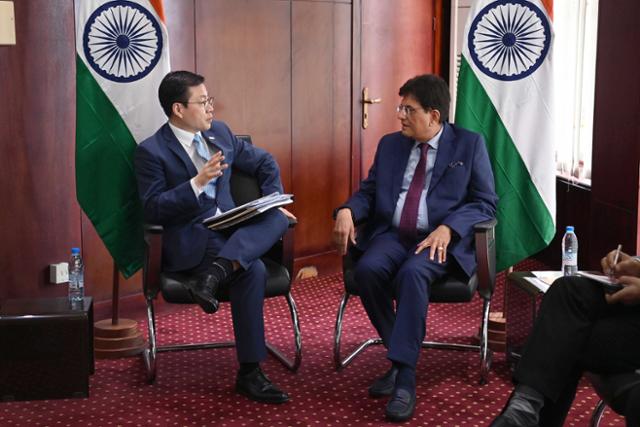
Trade Minister Yeo Han-koo said he asked India to increase shipments of naphtha during talks with Piyush Goyal on the sidelines of a World Trade Organization ministerial meeting, underscoring the urgency of stabilizing supply.
The request highlights growing pressure on South Korea’s energy supply chain, which remains heavily dependent on imports. Naphtha, a key input for petrochemical production, is particularly vulnerable to disruptions tied to Middle East instability, where a large share of global supply originates.
India has emerged as a secondary but increasingly important supplier. It currently accounts for a modest share of South Korea’s naphtha imports, but officials see room to expand volumes as part of a broader diversification strategy.
The move also reflects shifting trade dynamics between the two countries. South Korea has maintained a sizable trade surplus with India, while New Delhi has raised concerns over imbalances. Expanding energy-related imports could help address both supply needs and bilateral trade tensions.
Still, discussions remain at an early stage, with both sides yet to enter detailed negotiations. Any increase in shipments would depend on commercial terms, logistics and India’s own export capacity.
The outreach comes as South Korea scrambles to reinforce supply resilience across its industrial base. The petrochemical sector, a cornerstone of the country’s export economy, is particularly sensitive to feedstock disruptions, with limited domestic alternatives.
Beyond India, Seoul is also deepening trade coordination with major partners. Talks with the U.S. have focused on digital trade and e-commerce cooperation, while discussions with the European Union and other economies have included supply-chain coordination and regulatory issues.
The broader strategy points to a more proactive approach to securing critical inputs in an increasingly fragmented global trade environment. As geopolitical risks reshape energy flows, South Korea’s ability to diversify supply sources is becoming a central pillar of its industrial policy.