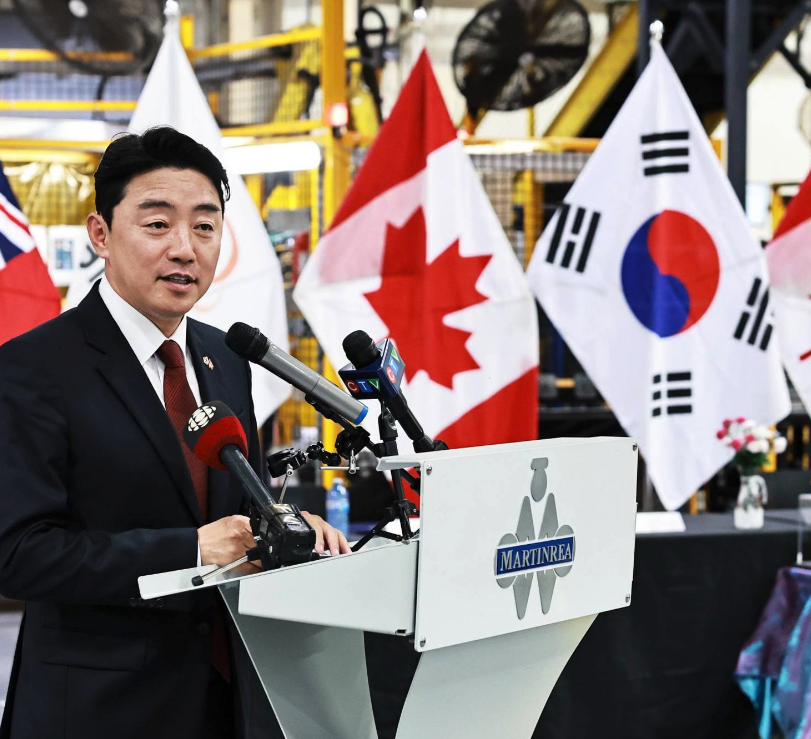
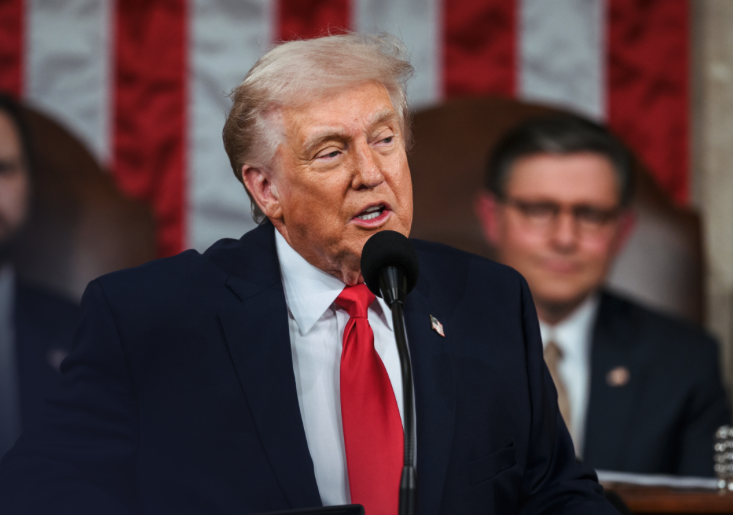
South Korea’s ambassador to the U.S. said on February 24 (local time) that Seoul will closely monitor follow-up measures by President Donald Trump after he imposed new global tariffs following a Supreme Court ruling that found his reciprocal tariff framework unlawful.
Speaking in Washington, Ambassador Kang Kyung-wha said Seoul would respond “in a way that best serves our national interest” while seeking to maintain a constructive atmosphere in talks with the U.S.
Mr. Trump invoked Section 122 of the Trade Act to impose tariffs of up to 15% for 150 days and signaled additional duties could follow under Section 301 of the Trade Act of 1974 and Section 232 of the Trade Expansion Act of 1962, citing unfair trade and national-security concerns.
Kang said uncertainty remains over potential tariff refunds and pledged close coordination with South Korean companies operating in the U.S.
Section 301 has also been cited by U.S.-based investors in Coupang in a petition to the Office of the United States Trade Representative following a major data-breach investigation in South Korea. A USTR probe is possible, though trade lawyers note that launching an investigation doesn’t automatically lead to tariffs.
Separately, South Korean officials recently discussed U.S.-bound investment projects tied to a bilateral fact sheet. Seoul is also weighing participation in a U.S.-led critical-minerals trade bloc aimed at countering China’s rare-earth export controls, while remaining cautious about a proposed price floor that could raise costs for its semiconductor, battery and EV industries.