The frozen-food aisle at Dollar Tree no longer serves only as a repository for basic, low-cost meals. As dollar stores expand their role in everyday grocery shopping, frozen sections have become one of the most tightly contested parts of the store, governed by strict price ceilings and relentless pressure for fast turnover.
In that setting, survival depends less on branding than on performance. Products that do not earn repeat purchases disappear quickly, replaced by alternatives that better match daily eating habits. Increasingly, those survivors include branded items once associated with mainstream supermarkets rather than deep-discount shelves.
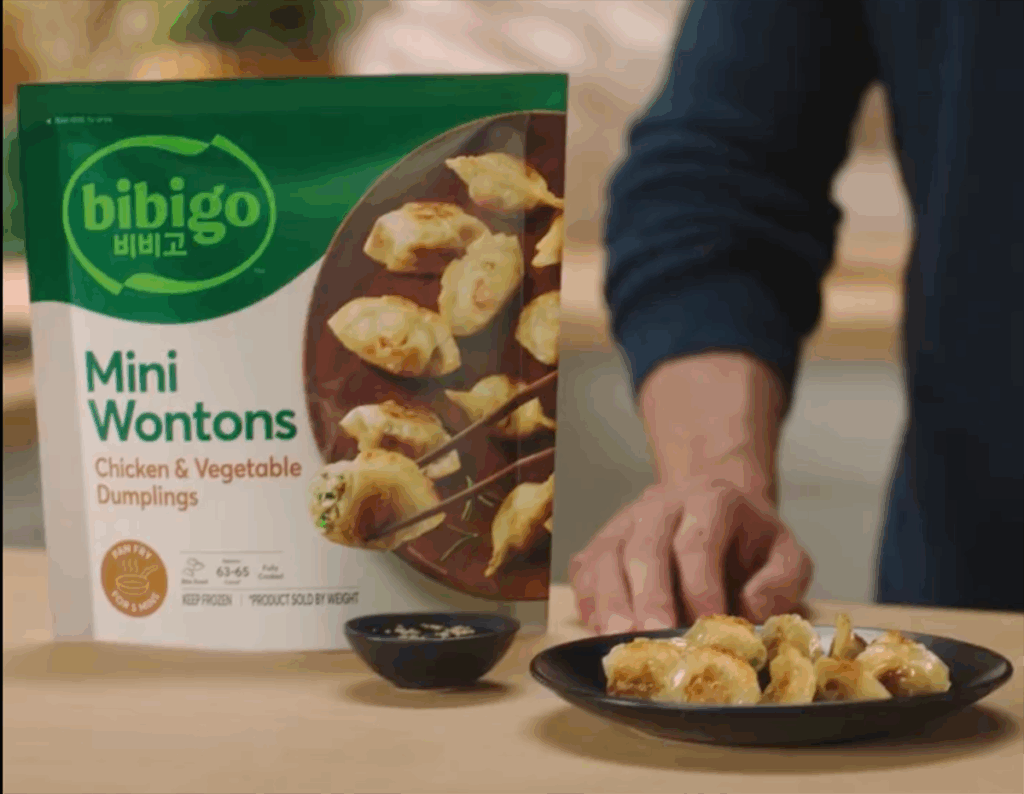
One such product is a frozen dumpling sold under the Bibigo label, a globally distributed Korean food brand with an established presence across large U.S. grocery chains and warehouse clubs. At Dollar Tree, the pork-and-vegetable dumplings sell for $3 per pack, positioning them near the top of the chain’s frozen price range while remaining firmly within its value-focused structure.
The dumplings’ traction reflects utility rather than novelty. They can be prepared in under two minutes in a microwave, include a dipping sauce and rely on a familiar mix of pork, tofu, cabbage and onion. That combination allows the product to function as a quick meal, a side dish or a soup addition—flexibility that matters in a category where convenience often determines whether an item is bought again.
Customer behavior suggests the product has cleared that hurdle. Reviews posted on Dollar Tree’s website frequently describe repeat purchases and bulk buying, with shoppers treating the dumplings as a regular freezer staple. In a retail format that rotates inventory aggressively, that kind of consistency is a prerequisite for staying on the shelf.
A chicken-and-vegetable version has also been added, extending appeal to shoppers who avoid pork and reinforcing the sense that the product line is being evaluated alongside everyday frozen foods rather than as a specialty import. Reviews emphasize dependable texture and flavor, traits that tend to separate durable sellers from short-lived experiments in discount retail.
Behind the Bibigo brand is CJ CheilJedang, one of South Korea’s largest food manufacturers. The company has spent years building distribution across conventional grocery channels. Moving into a dollar-store environment represents a further test, one that strips away premium positioning and places the product under the most unforgiving conditions of price sensitivity and volume-driven judgment.
For the grocery industry, the development highlights how dollar stores are reshaping food retail. Once peripheral to fresh and frozen categories, they are now central to how many households buy everyday meals. As their assortments evolve, they are becoming a filter that determines which products can function as routine purchases rather than occasional treats.
Viewed through that lens, the appearance of a Korean food brand in a dollar-store freezer is less a story about cuisine crossing borders than about how global manufacturers are adapting to the lowest rung of the retail ladder—where survival depends not on image, but on whether shoppers reach for the same item again the next time they open the freezer.