South Korean President Lee Jae-myung has delivered one of his clearest warnings yet about the country’s industrial future, arguing that resistance to humanoid robots on factory floors risks leaving the nation unprepared for an inevitable technological shift. His remarks, aimed squarely at labor opposition within the auto sector, have intensified a public clash with one of South Korea’s most powerful unions.
The comments came as Hyundai Motor Co. faces mounting pushback from its labor union following the automaker’s unveiling of a humanoid robot designed for industrial use. The dispute has become a focal point in a broader national debate over how South Korea should prepare for an era in which automation and artificial intelligence are no longer experimental, but embedded in everyday production.
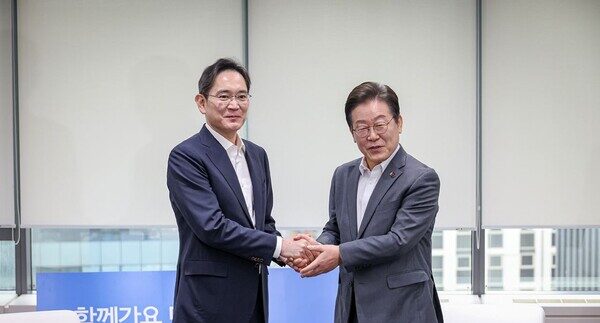
Speaking at a senior aides’ meeting on Jan. 29, Mr. Lee dismissed attempts to block robots from production sites, likening technological change to “a giant cart that is already rolling.” Societies, he said, can either adapt or be dragged behind it. “The role of government is not to stop change,” he added, “but to help people learn and adjust.”
The remarks were widely read as a pointed response to Hyundai Motor’s labor union, which has said it would not accept the introduction of a single humanoid robot without prior agreement through labor-management negotiations. Union leaders have warned that automation could accelerate job losses and worsen working conditions, particularly in manufacturing plants that have long provided stable, unionized employment.
Organized labor responded swiftly. The Korean Metal Workers’ Union, which represents Hyundai workers, questioned whether the state should simply accept technological disruption without safeguards. “Is it the role of government to stand by and watch the cart roll?” the union said, calling for stronger intervention to ensure worker protections and a fair transition.
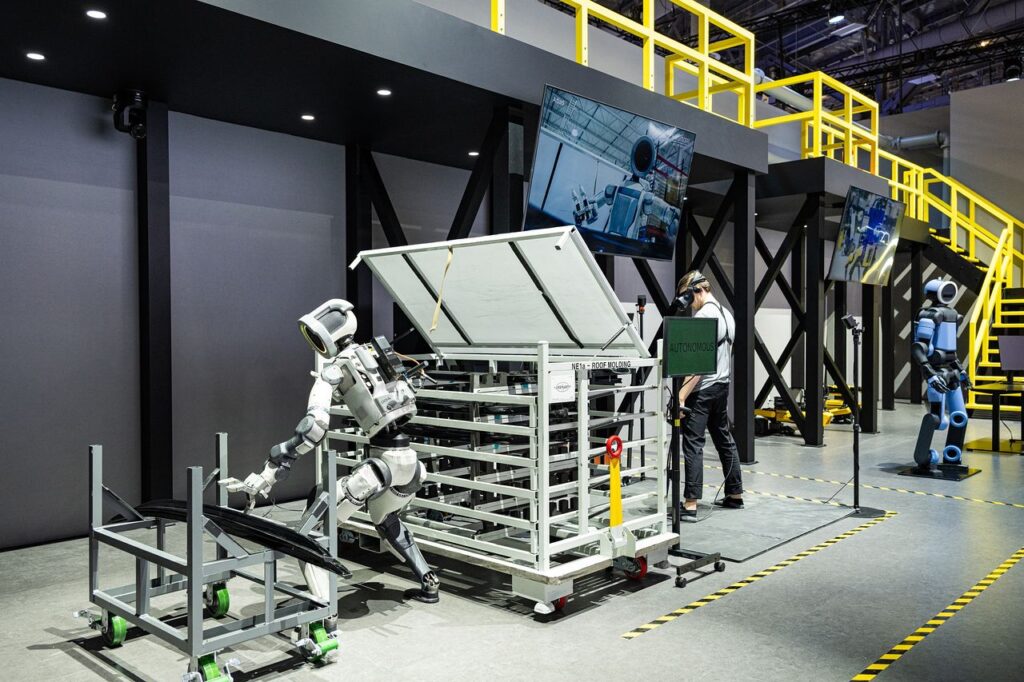
Tensions escalated earlier this month after Hyundai Motor Group showcased its humanoid robot, Atlas, at the Consumer Electronics Show in Las Vegas. The company presented the robot as a solution for physically demanding and hazardous tasks, part of a broader push to integrate robotics into manufacturing. For unions, the demonstration symbolized how quickly automation could move from promise to pressure on human labor.
Union leaders have rejected accusations that they oppose innovation itself. In a statement released the same day as Mr. Lee’s remarks, the metalworkers’ union said it was merely demanding discussions already required under collective bargaining agreements, including how robots might affect workplace safety, job design and employment stability. The union also pushed back against comparisons to the 19th-century Luddite movement, saying its position was about negotiation, not rejection.
Mr. Lee, however, signaled little patience for blanket resistance. Warning against reflexive responses such as “this can’t happen” or “don’t even talk about it,” he argued that such attitudes only delay adaptation. The government’s priority, he said, should be education, retraining and preparing workers for new roles created by technological change, rather than attempting to block innovation at the factory gate.
The confrontation highlights a deeper challenge facing South Korea. Home to some of the world’s most advanced manufacturers, the country is under pressure to maintain global competitiveness at a time when automation is rapidly becoming standard across industrial economies. At the same time, its social and labor institutions have struggled to keep pace with the speed of technological change.
The dispute surrounding Hyundai’s humanoid robots is emerging as an early test of how the Lee administration intends to manage that transition. More than a fight over a single robot, it reflects a larger question confronting South Korea: whether it can prepare its workforce for the coming robot age fast enough to avoid turning technological progress into a source of social conflict.