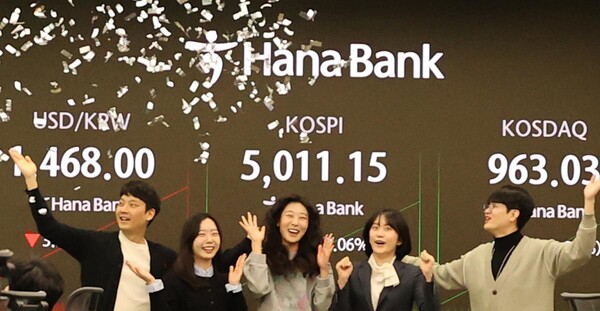
South Korea’s benchmark Kospi climbed back above the 5,000 level in early trading Thursday, supported by aggressive buying from retail investors as global risk sentiment improved.
The index rose 1.27% to 5,015.25 as of 9:21 a.m. local time, after opening at 4,984.08, up 0.64% from the previous close. The rebound restored a psychologically significant milestone after the Kospi briefly touched 5,000 intraday Wednesday but slipped back to finish in the high 4,900s.
The Korean won also strengthened, opening at 1,465.0 per U.S. dollar, 4.9 won firmer than the prior session.
Retail investors led the advance, posting net purchases of about $77 million, according to exchange data. Foreign investors and institutions remained net sellers, unloading roughly $55 million and $10 million, respectively. Foreigners also sold about $43 million worth of Kospi 200 index futures.
Korean equities tracked gains in global markets overnight. U.S. stocks advanced after former President Donald Trump withdrew proposed tariffs on Europe, easing trade concerns. Sentiment was further supported by reports that the U.S., Ukraine and Russia agreed to hold their first three-party talks aimed at ending the war.
Tesla shares added to the positive tone, rising about 4% after Chief Executive Elon Musk made a surprise appearance at the World Economic Forum in Davos, where he emphasized the long-term impact of artificial intelligence and robotics.
Still, investors remained cautious ahead of the Bank of Japan’s policy decision later in the day. The central bank is widely expected to keep its benchmark rate unchanged at 0.75%, but markets are watching for any hawkish signals from Governor Kazuo Ueda amid persistent inflation pressures.
Foreign sentiment was also weighed down by a sharp drop in Intel shares after hours. The chipmaker beat expectations for fourth-quarter earnings, but its first-quarter outlook disappointed investors, sending the stock down more than 12% in late trading.
Geopolitical risks added another layer of uncertainty after Trump said a large naval fleet was moving toward Iran, stoking concerns over rising tensions in the Middle East.
“Markets are likely to see a fierce tug-of-war around the 5,000 level,” said Han Ji-young, a researcher at Kiwoom Securities. “Major milestones often act as psychological resistance, and the selloff in Intel could pressure Korean semiconductor stocks.”
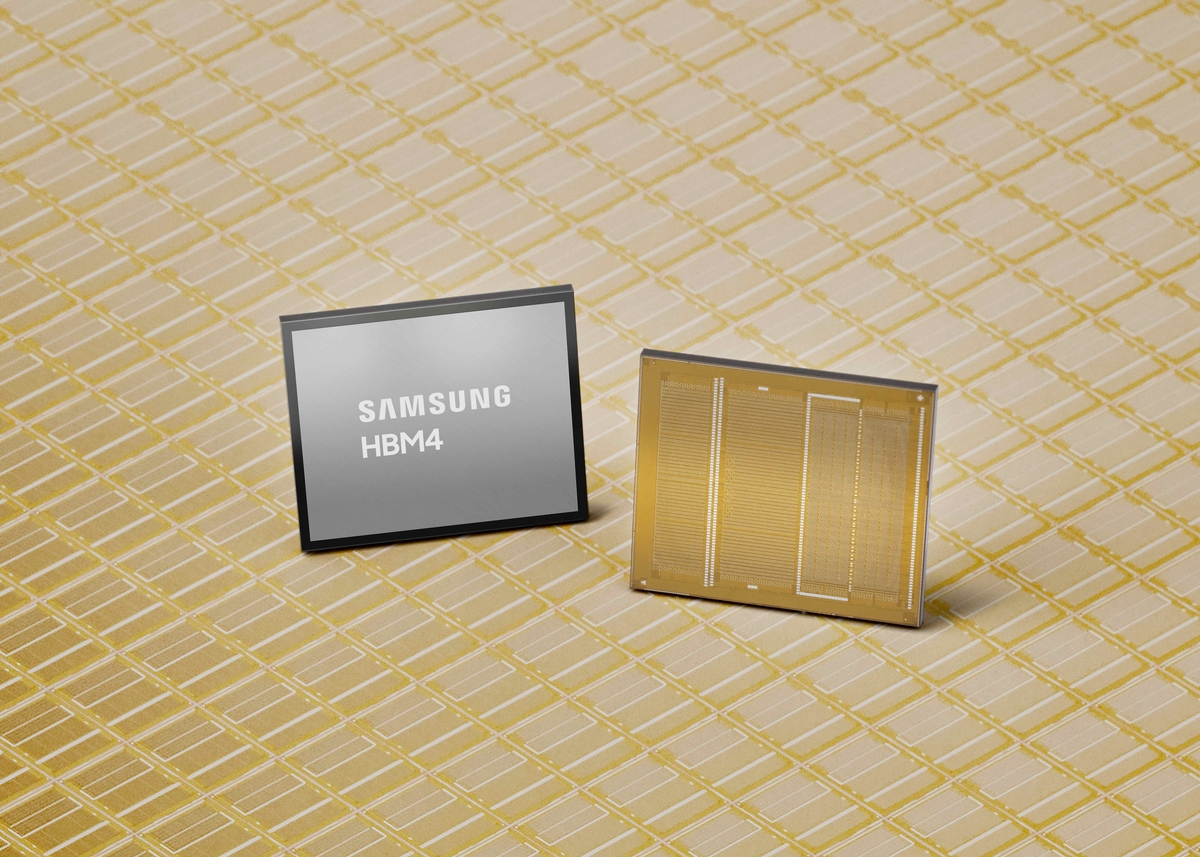
Among large-cap stocks, Samsung Electronics gained 1.12%, while SK Hynix fell 1.32%, underscoring mixed performance across chipmakers. Battery-related shares advanced, buoyed by Tesla’s rally, while automakers and several defense, financial and technology stocks declined.
By sector, securities firms, construction and pharmaceutical shares led gains, while utilities, transportation and precision medical equipment stocks lagged.
The tech-heavy Kosdaq index also rose, adding 0.85% to 978.57. Retail and institutional investors bought a combined $24 million, offsetting roughly $24 million in foreign selling.