Samsung Display is expanding its footprint in China’s fast-evolving electric-vehicle market, supplying multiple OLED panels for the Zeekr 9X, a flagship sport-utility vehicle from Geely Group’s premium EV brand. The deal underscores how advanced display technology is emerging as a key differentiator in the global race for high-end electric vehicles.
The 9X, produced by Zeekr, has gained momentum in China’s luxury SUV segment, where digital-heavy interiors are increasingly used to signal both status and technological sophistication. Samsung Display began full-scale shipments of OLED panels for the model in the second half of last year, extending a partnership that began with the Zeekr 009 in 2024.
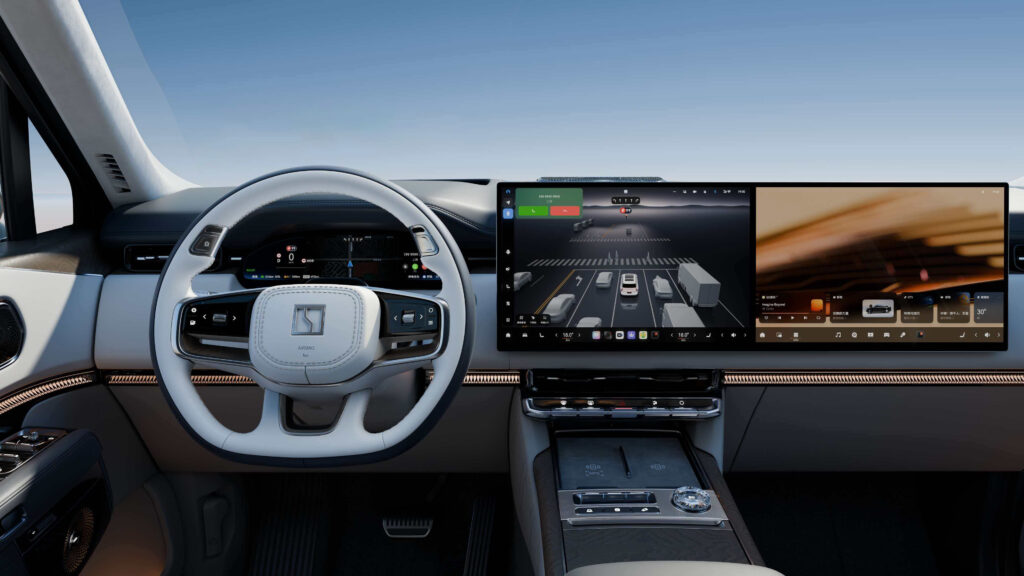
Under the agreement, Samsung Display supplies three OLED screens for the 9X: a 16-inch central information display, a 16-inch passenger-side display and a 17-inch rear-seat entertainment screen. The two front displays form a continuous, wide-format layout across the dashboard, reflecting a broader industry shift toward screen-centric interiors that blur traditional boundaries between driver and passenger interfaces while preserving separate functions.
The rear-seat display highlights how in-car screens are increasingly being designed to solve practical layout challenges rather than serve as purely aesthetic upgrades. Mounted on the ceiling, the 17-inch OLED panel can slide along rails between the second and third rows, allowing passengers in a three-row, six-seat configuration to adjust the screen for better visibility—addressing a common shortcoming of fixed rear displays that often disadvantage third-row occupants.
Samsung Display says the OLED system’s wide viewing angles, high contrast ratios and deep black levels enhance readability and image quality throughout the cabin, reinforcing the growing perception of displays as a core element of vehicle quality. As competition intensifies, automakers are placing in-car screens on par with powertrain performance and advanced driver-assistance features in shaping consumer perception.
Executives at Samsung Display describe automotive OLED as shifting from a niche business into a strategic growth engine, driven by global automakers’ push to differentiate interiors as vehicles become more software- and experience-oriented. Zeekr said the OLED-based layout enabled the 9X to be designed as a cinema-like space tailored to a six-seat SUV, illustrating how display technology is influencing vehicle architecture as much as infotainment systems.
The partnership reflects a broader realignment in the electric-vehicle supply chain, where Asian display makers are becoming critical suppliers not only to consumer electronics but also to next-generation automobiles, as screens move to the center of both the driving and passenger experience.
Samsung Display Deepens Push Into China’s Premium EV Market With Zeekr 9X OLED Supply
Samsung Display is expanding its footprint in China’s fast-evolving electric-vehicle market, supplying multiple OLED panels for the Zeekr 9X, a flagship sport-utility vehicle from Geely Group’s premium EV brand. The deal underscores how advanced display technology is emerging as a key differentiator in the global race for high-end electric vehicles.
The 9X, produced by Zeekr, has gained momentum in China’s luxury SUV segment, where digital-heavy interiors are increasingly used to signal both status and technological sophistication. Samsung Display began full-scale shipments of OLED panels for the model in the second half of last year, extending a partnership that began with the Zeekr 009 in 2024.
Under the agreement, Samsung Display supplies three OLED screens for the 9X: a 16-inch central information display, a 16-inch passenger-side display and a 17-inch rear-seat entertainment screen. The two front displays form a continuous, wide-format layout across the dashboard, reflecting a broader industry shift toward screen-centric interiors that blur traditional boundaries between driver and passenger interfaces while preserving separate functions.
The rear-seat display highlights how in-car screens are increasingly being designed to solve practical layout challenges rather than serve as purely aesthetic upgrades. Mounted on the ceiling, the 17-inch OLED panel can slide along rails between the second and third rows, allowing passengers in a three-row, six-seat configuration to adjust the screen for better visibility—addressing a common shortcoming of fixed rear displays that often disadvantage third-row occupants.
Samsung Display says the OLED system’s wide viewing angles, high contrast ratios and deep black levels enhance readability and image quality throughout the cabin, reinforcing the growing perception of displays as a core element of vehicle quality. As competition intensifies, automakers are placing in-car screens on par with powertrain performance and advanced driver-assistance features in shaping consumer perception.
Executives at Samsung Display describe automotive OLED as shifting from a niche business into a strategic growth engine, driven by global automakers’ push to differentiate interiors as vehicles become more software- and experience-oriented. Zeekr said the OLED-based layout enabled the 9X to be designed as a cinema-like space tailored to a six-seat SUV, illustrating how display technology is influencing vehicle architecture as much as infotainment systems.
The partnership reflects a broader realignment in the electric-vehicle supply chain, where Asian display makers are becoming critical suppliers not only to consumer electronics but also to next-generation automobiles, as screens move to the center of both the driving and passenger experience.