CJ Olive Young, South Korea’s largest health and beauty retailer, is turning the United States into the first test market for its global expansion strategy, opening physical stores in one of the world’s most competitive beauty markets before pushing the same retail-and-brand model into emerging economies such as Pakistan.
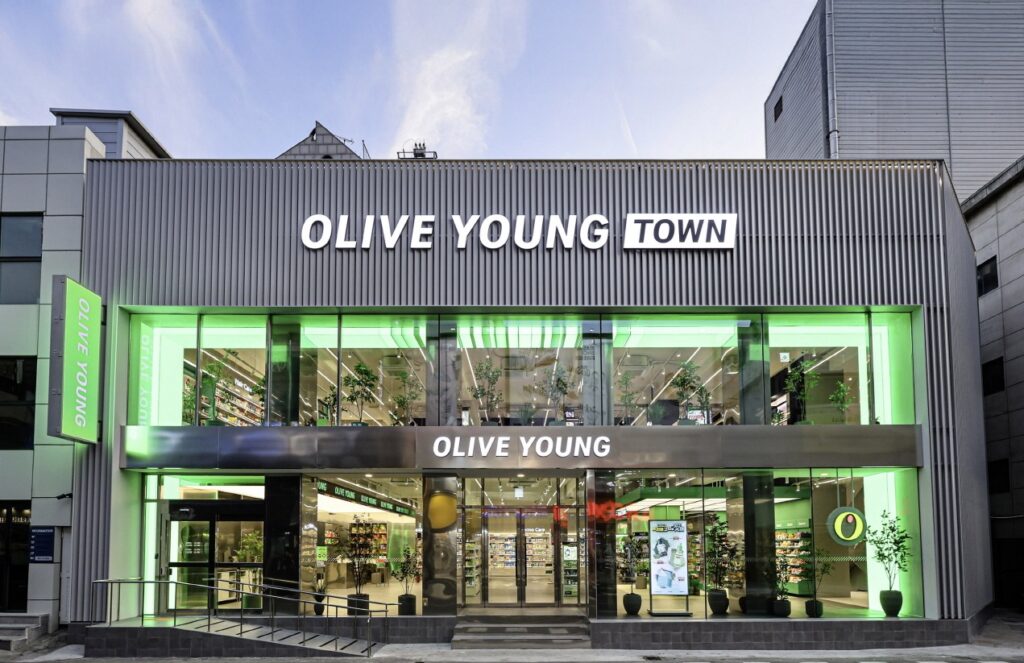
The company plans to open four brick-and-mortar stores in the U.S. next year, doubling its original plan and underscoring how central the American market has become to its overseas ambitions. The first store is scheduled to open in May in Pasadena, California, followed by locations at Westfield Century City in Los Angeles and the Del Amo Fashion Center in Torrance. A fourth site in California is under review. Olive Young operates nearly 1,400 stores in South Korea but currently has no permanent physical locations abroad.
By choosing the U.S. as its initial launch market, Olive Young is entering terrain dominated by established specialty chains such as Sephora and Ulta Beauty. Rather than competing on scale, the retailer is positioning its stores as experience-driven spaces targeting younger consumers, with an emphasis on product testing and discovery. The U.S. stores are expected to carry about 400 Korean beauty brands alongside a limited number of non-Korean labels, presenting the format as a curated gateway to Korean skincare and cosmetics.
The U.S. rollout reflects a broader effort to export the system that underpins Korean beauty’s domestic success. In South Korea, Olive Young functions not only as a distributor but also as a gatekeeper—spotting trends, incubating smaller brands and scaling its own private-label products. Establishing a physical presence in the U.S. is designed to test whether that platform model can translate to a mature market where brand loyalty and shopping habits are deeply entrenched.
Once that model is established in the U.S., Olive Young is applying it differently in emerging markets. The company has begun expanding its private-label brands into Pakistan through online channels, starting with its dermatological skincare line Bioheal Boh. Products are sold via Shoppingbag.pk, a local cross-border e-commerce platform, with distribution largely handled through direct imports from Amazon.
The Pakistan push represents a lower-cost extension of the same strategy. Instead of investing in physical retail, Olive Young is using e-commerce to test demand in markets with young populations and rapidly expanding social-media and online-shopping adoption. Bioheal Boh’s flagship lifting cream has sold more than 6.5 million units globally over the past five years, giving the company a proven product to introduce without committing to local infrastructure.
Together, the two moves form a single strategic arc. The United States serves as the primary launchpad, where Olive Young is betting that physical retail can reposition Korean beauty from a niche import into a mainstream category. Markets such as Pakistan follow as the next phase, where digital distribution allows the company to broaden reach while limiting risk.
Olive Young is expected to surpass roughly $3.4 billion in annual revenue this year. Backed by its dominant position at home, the retailer is moving beyond exporting individual hero products, instead advancing a broader global push—using the U.S. to validate its retail platform before carrying Korean beauty deeper into emerging markets.