As travel demand across Asia continues to reconfigure in the uneven recovery from the pandemic, Korean Air, the flag carrier of South Korea and one of the region’s largest network airlines, is moving one of its most advanced long-haul aircraft onto a short-haul international route, a signal of how airlines are repositioning capacity toward markets where demand and pricing power remain strongest.
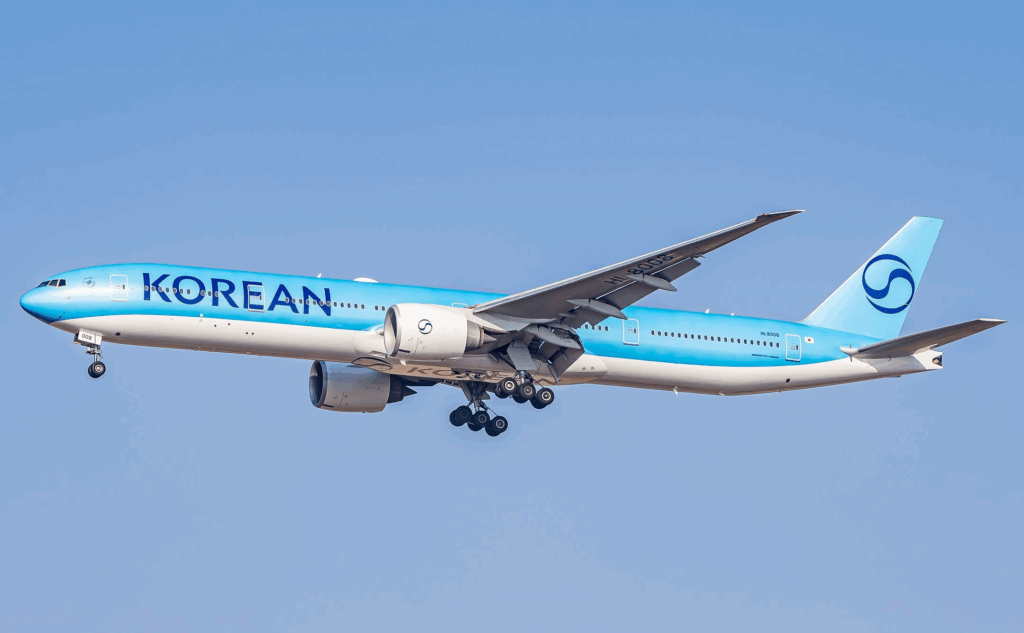
Beginning in early February, the carrier will deploy its Airbus A350-900 on select flights between Seoul’s Incheon International Airport and Tokyo’s Haneda Airport, according to schedule data from AeroRoutes. The widebody aircraft will operate twice weekly on the route through most of the month, a period that coincides with peak winter travel out of South Korea.
The move is less about a holiday surge than about where traffic in Northeast Asia is concentrating. February has long been a high-volume month for travel between South Korea and Japan, supported by a mix of leisure travelers and short-haul business traffic. Haneda, with its proximity to central Tokyo, remains one of the most premium short-haul airports in the region, allowing airlines to sustain higher fares even on relatively brief flights.
By assigning a long-haul aircraft to the route, Korean Air is effectively converting excess widebody capacity into near-term revenue. The decision comes as the recovery of China routes has lagged expectations, leaving airlines across the region with aircraft that are harder to deploy profitably on their original networks. Japan, by contrast, has emerged as one of the most stable international markets in Asia, particularly for travelers originating in South Korea.
Industry analysts say the shift also reflects changes in competitive dynamics. Travel between China and Japan has cooled amid diplomatic friction and regulatory uncertainty, reducing the presence of Chinese carriers in Japanese airspace. That pullback has opened room for other Asian airlines to expand frequencies or upsize aircraft on key routes without triggering immediate fare pressure.
The aircraft Korean Air is using to do so, the Airbus A350-900, is designed primarily for long-haul operations. Built largely from carbon-fiber composite materials, it offers lower fuel burn and operating costs than older widebodies, making it flexible enough to deploy even on high-density regional routes when demand justifies the capacity.
For Korean Air, the temporary redeployment is also a practical test of fleet flexibility. The airline has identified the A350 as a core component of its next-generation fleet, and its use on a short-haul premium route underscores how modern widebody aircraft are increasingly treated as movable assets rather than fixed long-haul tools.
The adjustment comes as the carrier continues to refine its network and fleet strategy ahead of its planned integration with Asiana Airlines. Rather than expanding schedules wholesale, Korean Air has focused on reallocating aircraft to markets with clear demand visibility, using capacity shifts to capture near-term revenue while maintaining longer-term operational discipline.
In that sense, the A350’s appearance on the Seoul–Haneda route is less a seasonal gesture than a snapshot of a broader trend, one in which airlines are reshaping their networks around where travelers are actually flying, not where they once were.