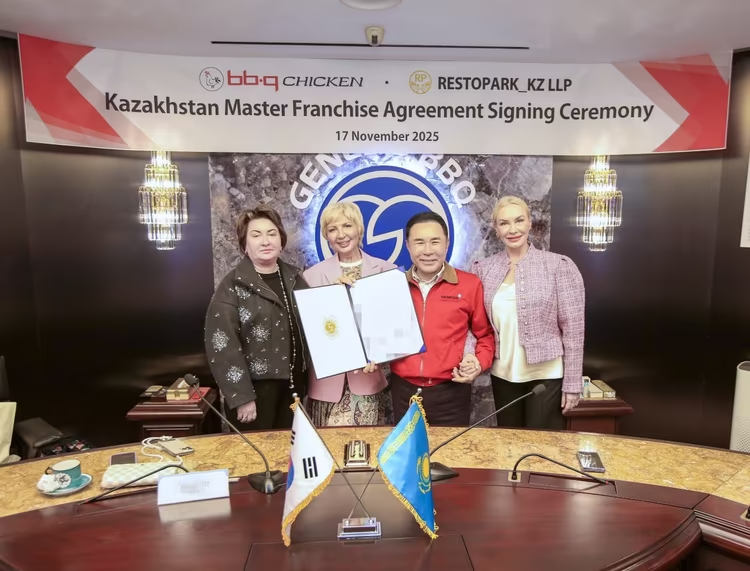
Genesis BBQ Group, South Korea’s largest fried-chicken chain, has signed a master franchise agreement in Kazakhstan, a move that underscores its ambitions to build a foothold in Central Asia’s fast-growing consumer markets.
Kazakhstan, the region’s largest economy, is increasingly viewed by global food and retail brands as a strategic gateway to Central Asia, given its population scale, logistics infrastructure and rising consumer demand. Dining and retail activity has expanded rapidly in recent years, particularly in the commercial hub of Almaty and the capital, Astana. A relatively young population and consumer tastes shaped by both European and Asian influences have made the market attractive to Korean food companies.
BBQ’s local partner, Restopark KZ LLP, is a Kazakhstan-based food service and entertainment operator with a strong presence in Almaty. The group manages multi-concept restaurant venues offering a range of international cuisines, including American, European, Japanese and Russian fare.
Restopark is best known locally for its Brazilian-style churrasco restaurants, which combine live entertainment with dining—an experiential format that has resonated with consumers and helped differentiate the group in a competitive market.
Under the agreement, BBQ plans to open flagship stores in Astana and Almaty to build brand awareness and establish operational benchmarks. After stabilizing those locations, the company aims to expand its quick-service restaurant format through franchising, targeting shopping malls and other high-traffic commercial districts.
Kazakhstan is also expected to serve as a regional base for further expansion into neighboring markets such as Uzbekistan and Kyrgyzstan, once the initial outlets are operating steadily, the company said.
“Kazakhstan represents a strategically important platform for expansion across Central Asia,” a BBQ Group official said. “By partnering with Restopark, which has deep expertise in the local food and entertainment sector, we aim to introduce K-chicken to the region while strengthening BBQ’s global competitiveness.”
The move reflects a broader push by Korean food brands to accelerate overseas growth, leveraging the global appeal of K-culture to enter emerging markets beyond North America and East Asia.