
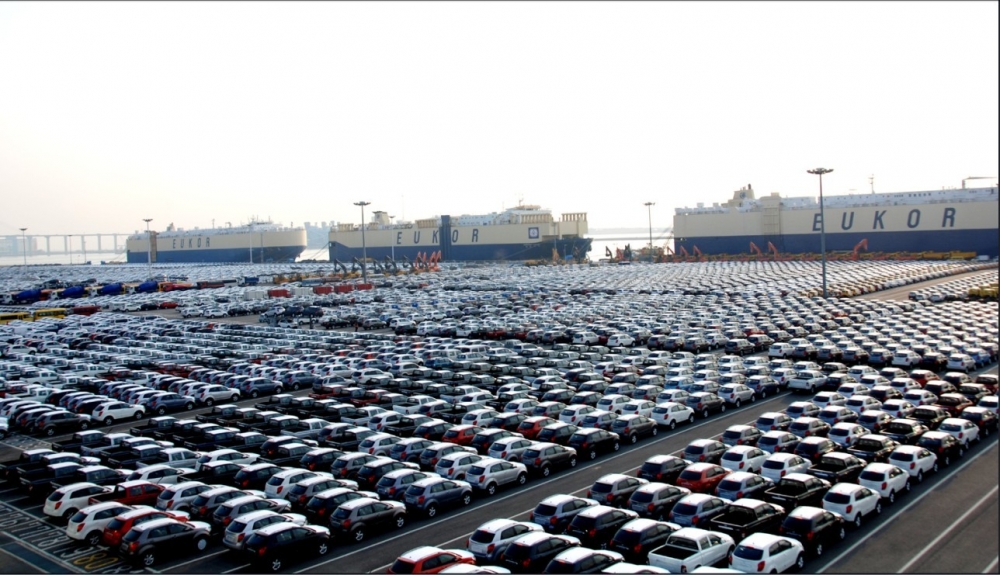
South Korea’s auto exports are on track to fall for the first time in five years, with U.S. tariffs and the rapid expansion of local production weighing on global shipments heading into 2025.
KAMA, the nation’s auto-industry association, forecasts outbound vehicle exports at between 2.71 million and 2.72 million units this year, a decline of roughly 2% to 3% from 2023.
Through October, exports totaled 2.25 million vehicles, and monthly shipments are expected to average about 230,000 for the remainder of the year. A full-year drop would mark the first since 2020, when the pandemic disrupted global production and logistics.
Despite the decline in volume, South Korea is still on pace to hit a record $66 billion in auto-export value this year, supported by a surge in used-vehicle shipments. Used cars now account for roughly 10% to 11% of total export value, helping offset softer global demand for new vehicles.
The steepest drag this year has come from the United States, South Korea’s most important export destination. Shipments to the U.S. fell 7.9% in the January–October period to 1.11 million vehicles — nearly half of Korea’s entire auto-export footprint. Gains in Europe, Latin America and Africa were insufficient to counter the slowdown.
Industry analysts say Hyundai Motor Group’s aggressive push into U.S. manufacturing is a key factor. Hyundai opened its third American production hub — Hyundai Motor Group Metaplant America — earlier this year, producing more than 53,000 vehicles through October. The plant is slated to expand annual capacity from 300,000 to 500,000 units, further reducing reliance on imports from South Korea.
Tariffs remain another pressure point. Although U.S. duties on Korean-made vehicles have been trimmed to 15% from 25%, the rate is still a meaningful cost burden after years of zero tariffs. Hyundai and Kia have absorbed much of the impact to avoid higher sticker prices in the U.S. market. Analysts caution that the strategy may not be sustainable next year; passing more of the tariff burden to consumers could inject additional volatility into U.S.-bound shipments.
The broader U.S. auto market is also losing steam. GlobalData expects U.S. passenger and light-commercial vehicle sales to edge down 0.7% in 2025 to roughly 15 million units, reflecting softening demand following post-pandemic replacement cycles.
With tariffs rising, U.S. demand cooling and more Korean-branded vehicles being built on American soil, analysts say South Korea faces another challenging year for auto exports.