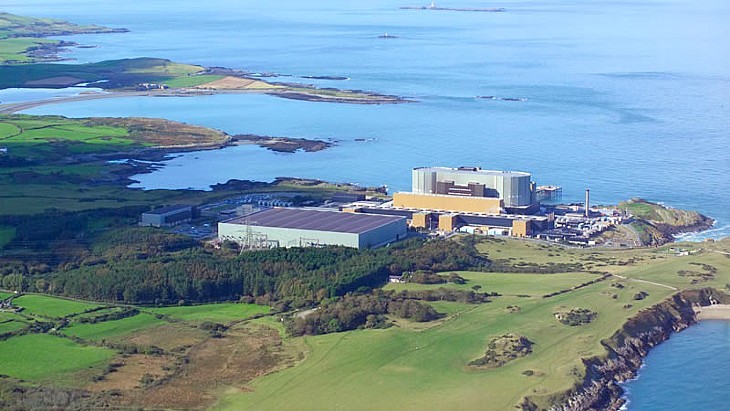
Doosan Enerbility, a major South Korean equipment manufacturer, is drawing renewed attention in global energy circles after the United Kingdom confirmed Wylfa in northern Wales as the construction site for three Rolls-Royce small modular reactors.
The British government plans to begin site development next year and target commercial operation in the mid-2030s, putting the project on a trajectory where supply-chain partners will play a central role.
Rolls-Royce has been in discussions with Doosan Enerbility over key components for its SMR design, including the reactor pressure vessel, one of the most complex and value-heavy parts of any nuclear build.
While the final supply contracts have yet to be announced, the selection of Wylfa as the deployment site signals that the UK project is moving from concept to execution, a phase where manufacturing partners typically gain clearer visibility and potential orders.
The reactors will be installed on the grounds of a former Magnox station that shut down in 2012 and is now undergoing decommissioning. British authorities launched their SMR selection process in 2023 and formalized Rolls-Royce as their provider earlier this year.
The government expects to finalize a contract with the company by the end of 2024, begin early construction work in 2025 and reach a final investment decision in 2029.
Rolls-Royce plans to supply three 470-megawatt electric units based on a small pressurized water reactor design intended to provide long-term baseload power for at least sixty years.
As the UK races to replace aging nuclear capacity and secure more predictable low-carbon generation, the project is becoming one of the largest near-term opportunities in the emerging SMR market.
For Doosan Enerbility, the development underscores its effort to position itself as a global manufacturer in next-generation nuclear equipment, an area increasingly shaped by international supply chains rather than domestic builds alone.
For U.S. readers, the company’s role illustrates how heavy-industry players outside the United States are positioning themselves inside early commercial SMR programs at a moment when America’s own SMR projects remain in various stages of regulatory review, redesign or financing.