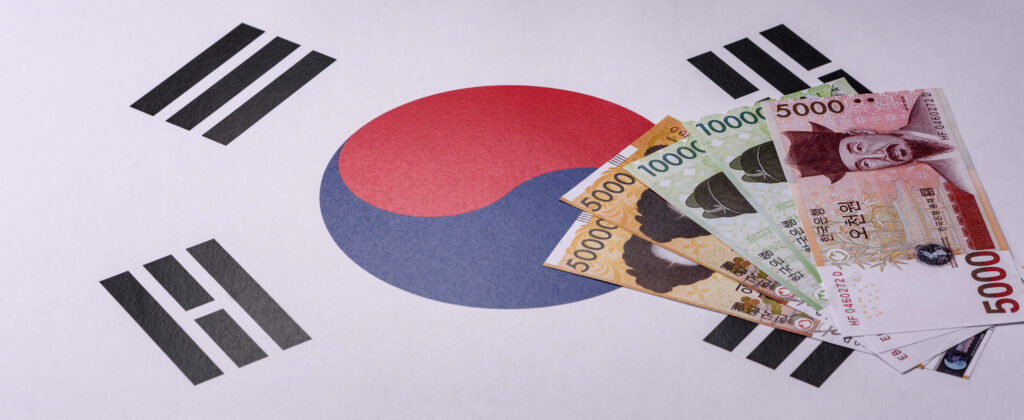
South Korean businesses are sounding the alarm as the won tumbled to ₩1,470 per U.S. dollar on November 12 — its weakest point in nearly a year — squeezing profit margins for companies dependent on imported raw materials.
For many, every small move in the exchange rate hits hard. “A ₩10 shift in the won-dollar rate can swing our operating profit by billions of won,” said a finance manager at one of Korea’s major confectionery producers. The company imports about half of its ingredients from overseas, making currency assumptions a make-or-break factor for annual budgets.
The timing couldn’t be worse. Most firms are finalizing their 2025 budgets, but the volatility makes long-term planning nearly impossible. “Imported steel prices have skyrocketed, and currency fluctuations just add to the chaos,” said an executive at a Busan-based ship component maker. “Losses can easily reach hundreds of millions of won.”
The surge caught many off guard. A survey by the Korea Chamber of Commerce and Industry earlier this year found that only 11% of large firms had projected rates as high as today’s ₩1,450–₩1,500 range. The average rate from January to November stood at ₩1,414, meaning most corporate forecasts missed the mark by a wide margin.
The fallout varies by sector. Export-heavy industries like shipbuilding and automobiles could gain short-term benefits, but import-reliant sectors such as petrochemicals, steel, and electronics are taking the hit from higher input costs. Even major tech players that manufacture abroad are feeling pressure as they pay more for imported components.
Small and medium-sized enterprises (SMEs) face the toughest squeeze. They rely heavily on imported intermediate goods and have limited pricing power. A 1% rise in the exchange rate can cut SME operating margins by 0.36 percentage points, compared with 0.29 points for large corporations, according to Korea’s central bank data.
Analysts say the current exchange rate underscores a broader risk for Asia’s fourth-largest economy: the tension between export competitiveness and domestic inflation. As South Korea’s businesses navigate a volatile global currency environment, every ₩10 shift now carries global consequences — from trade flows to inflationary pressure that could ripple far beyond Seoul.